
There are a number of historically important buildings in and around l’Escala that you might want to see.
Sant Pere Church
Carrer de Santa Màxima, 31
Located right in the old town, l’Escala’s parish church is aptly named after St Peter, one of the patron saints of fishermen and built in the Gothic style.
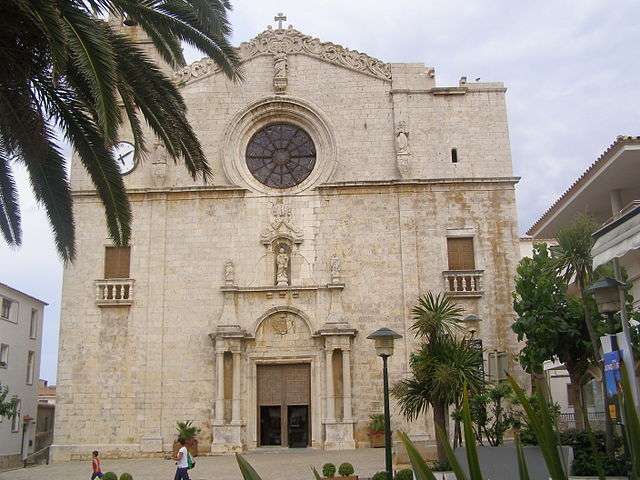
Sant Pere church. Photo by Daniel Culsan.
The church dates from the eighteenth century and was built after the previous church was destroyed after being stuck by lightning. It required repair work in the mid-nineteenth century because of water damage, when the roof was rebuilt. But who says lightning doesn’t strike twice? The facade needed to be renovated because of lightning damage.
Like many churches in Catalonia, the church was badly damaged in 1936 at the start of the Spanish Civil War. An anarchist mob started a fire which completely destroyed much of the interior, including the altar. The church was slowly repaired after the civil war and a new altar commissioned. More recently, the stained glass windows date from 1985.
Sant Martí d’Empúries
The medieval town of Sant Martí lies next to the Greco-Roman ruins. The location was originally the site of a Greek settlement built on a small island but is now part of the mainland.
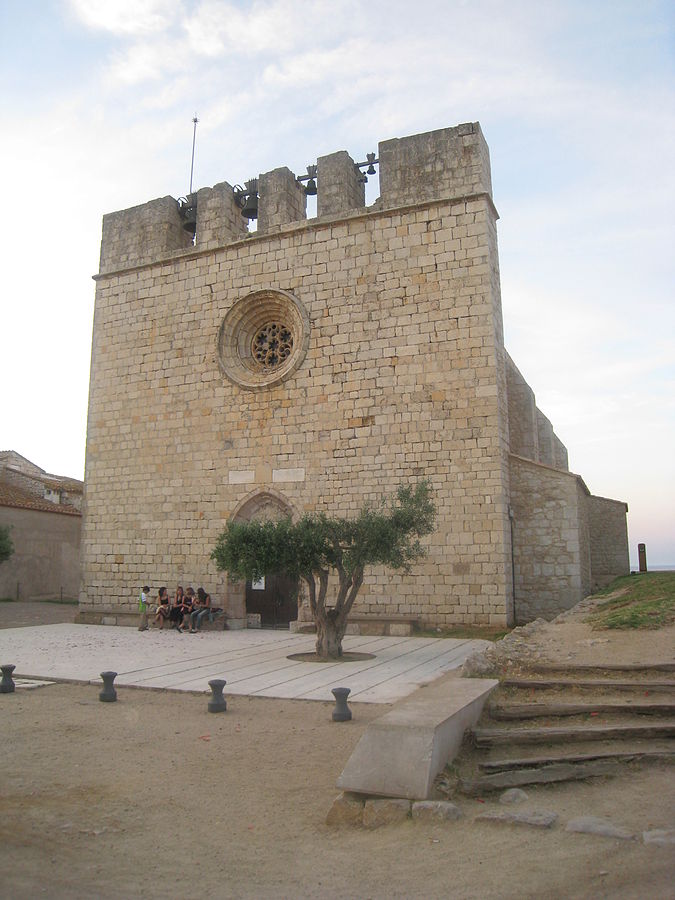
Church at Sant Marti d’Empúries. Photo by Miquel Girones.
The medieval town was constructed between the ninth and eleventh centuries and consists of a defensive wall with a number of towers surrounding the urban area. In the main square is a fifteenth century Gothic church and, like the church of Sant Pere, it was badly damaged in 1936.
During the latter half of the twentieth century many of the old houses were bought as second homes and the town has since been extensively refurbished. Sant Martí is now almost total pedestrianised and its picturesque streets are worth exploring. In case you need any extra motivation, there are a number of restaurants in the main square for when you’ve finished looking around.
Alfolí de la Sal
Carrer Alfolí, 6
Two buildings located in the old town take us back to l’Escala’s link to the fishing industry and anchovies.
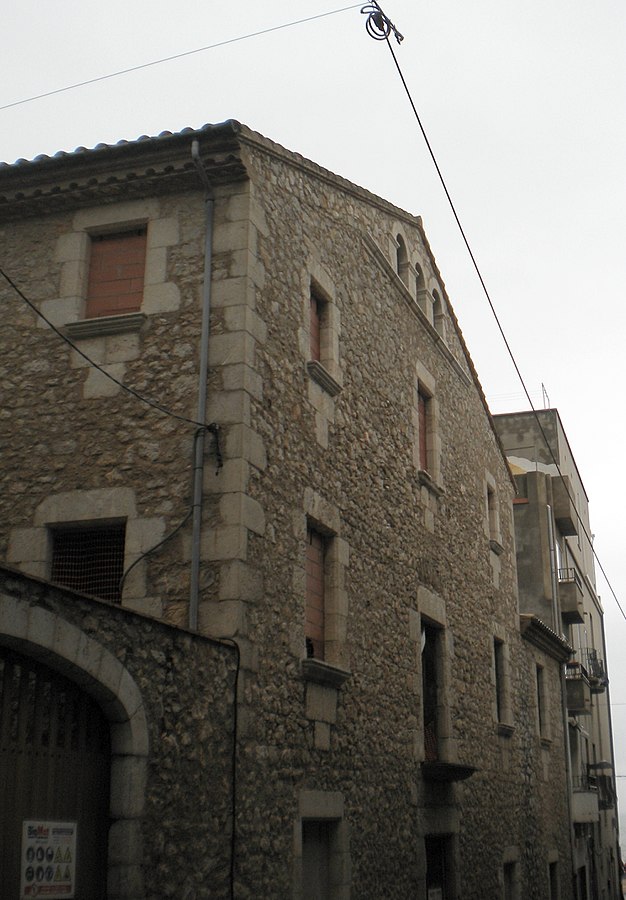
Alfolí de la sal. Photo by Àlex.
The Alfolí de la Sal was built as a store from where salt was distributed throughout the Empordà. It dates from the end of the sixteenth century and as well as being used for storage it was also a customs post, the location of the fisherman’s association and the basement was used for salting anchovies. The building is currently being refurbished and will be used as a cultural centre.
La Punxa House
Carrer del Port, 2
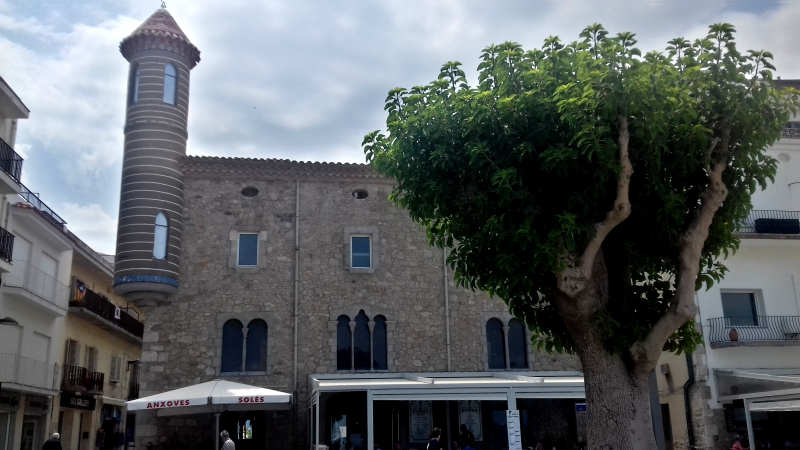
La Punxa. Photo by David Leigh
Just a few steps away is La Punxa House, distinct because of its circular tower. The house dates from the early twentieth century and was originally used as an ice factory. The ground floor now houses a bar and restaurant (La Punxa) and on the corner under the tower is a shop that sells anchovies. What else?
Maritime Cemetery
Carrer Garbí, 15
The old cemetery of l’Escala was built in the first half of the nineteenth century in the neo-classical style, the only one of its type on the Costa Brava.
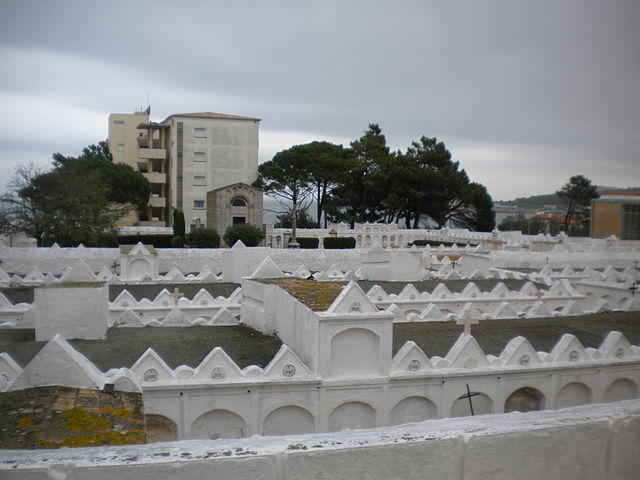
L’Escala’s maritime cemetery. Photo by Àlex.
Among the graves there are those of writer Caterina Albert, better known as Victor Català, as well as Josep Esquirol. The latter took the first photographs of the archaeological site at Empúries. Although no longer used, the cemetery it is within easy reach of the promenade. The Anchovy and Salt Museum also offers guided tours but it is open to the public.
Montgó tower
On top Montgó hill is a late sixteenth century watchtower built to warn local fishermen of pirate attacks and offer protecting.
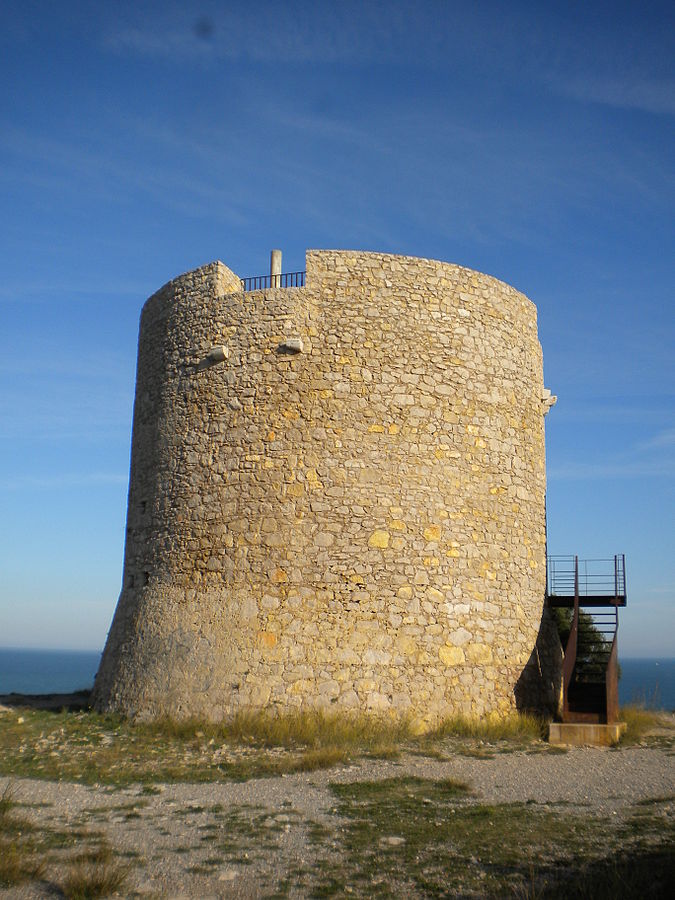
Montgó tower overlooks the gulf of Roses. Photo by Àlex.
The tower, which was refurbished in 1999, was manned by a garrison of soldiers equipped with a cannon and would signal danger by lighting a fire. Although you can’t go inside it is still worthwhile visiting for the view from the top of the hill. You can see why the tower was built there.

1 Comment
Beautiful St Marti d’Empuries. Because of Covid we haven’t been to our house near Figueres for over a year. We miss St Marti and especially La Terrassa restaurant very much. Maybe late Spring 2021.