On the camí de ronda, Costa Brava’s shoreline appears slowly, shaped by stone, pine and salt.
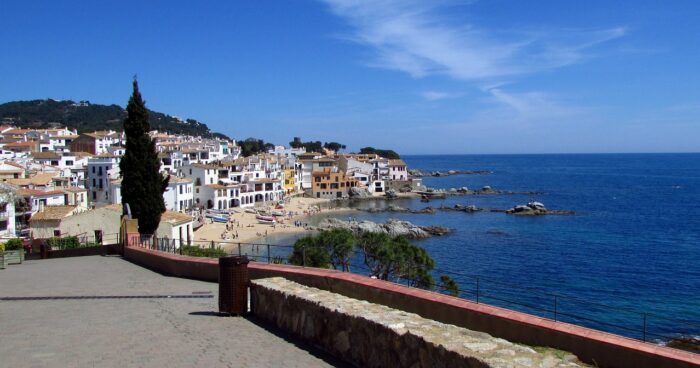
The camí de ronda at Calella de Palafrugell (Pixabay)
The camí de ronda is a coastal footpath that stretches almost the entire length of the Costa Brava, from Blanes in the south to Portbou, close to the French border. In total, it covers around 230 kilometres, though not as one continuous route. Some sections are modern promenades behind beaches, others are narrow stone steps hugging cliffs, and a few have disappeared altogether.
The name comes from the Catalan word ronda, meaning “patrol” or “round.” The path was once used by fishermen, smugglers and later by the Guardia Civil, who walked its length to monitor the frontier and keep an eye on the sea. In recent decades it has been restored and signposted as part of the GR-92, a long-distance trail that runs the entire Mediterranean coast of Catalonia.
For visitors today, the camí de ronda is the easiest way to explore the Costa Brava on foot. It passes through fishing villages, around coves and cliffs, and links many of the region’s best-known beaches. You don’t need to walk it all: each stretch has its own character, from the elegant paved route at S’Agaró to the rugged headlands around Begur and the windswept edges of Cap de Creus.
It isn’t a single experience but many. What unites it is the constant presence of the sea, always close, always guiding the way.
Where it begins, where it ends
The camí de ronda runs the length of the Costa Brava, officially starting in Blanes and finishing in Portbou, just before the French border. In between, it covers more than 200 kilometres of coastline, linking busy resort towns, small fishing villages, and stretches of wild, uninhabited cliff.
It is not a single unbroken path. In some places it disappears into roads or modern housing, in others it’s little more than a rough track across rock. But most of the coast is walkable, and many sections have been carefully restored, with stone steps, handrails and signposts. The route now forms part of the GR-92, the Catalan stretch of the European long-distance footpath that continues south through the Costa Daurada and north into France.
The character of the path changes constantly. Around Platja d’Aro or Lloret de Mar, it feels more like a seafront promenade, wide enough for families and strollers. Between Begur and Palafrugell, it narrows into steep climbs and descents, where stone steps drop into hidden coves and rise again through pine woods. Further north, around Cadaqués and the Cap de Creus, it turns wild and exposed, shaped by wind and rock.
Few visitors attempt to walk the entire route. Most choose individual stretches, often no more than an hour or two, linking a pair of villages or exploring a headland. Each section tells its own story, and part of the appeal is in the variety: one day you are following a paved curve behind beach umbrellas, the next edging along a cliff with only gulls for company.
Walking the path
To walk the camí de ronda is to see the Costa Brava at a gentle pace, with every step shifting the perspective. Sometimes the path is broad and paved, guiding you gently between cafés and beaches. Other times it shrinks to little more than a ledge carved into rock, with steep steps dropping suddenly into the sea. The variety is part of what keeps people coming back.
The surface underfoot changes constantly. Handrails appear and disappear. Signposts can be clear in one stretch, faint or absent in another. The only constant is the sea — sometimes calm and flat, sometimes restless and loud, always at your side.
A typical walk might begin in a village, winding past painted shutters, fishing boats pulled up on the sand, and the smell of food drifting from a bar. Then the path bends around a headland and suddenly you are alone, with only cicadas in the pines and the crash of water against rock. The camí de ronda has a way of shifting from crowded to solitary in the space of a few minutes.
Each season brings its own reality. In summer, the heat makes the climbs tough, and the narrowest sections can be crowded with visitors. In spring and autumn, the air is cooler, the light sharper, and the paths quieter. In winter, you may have whole stretches to yourself, the sound of your footsteps carrying in the clear air.
It is not a uniform experience, and that is its strength. Whether you walk for half an hour or a whole day, the path gives you the Costa Brava in pieces: coves, cliffs, villages, and water, all stitched together by stone and time.
The landscape it reveals
The camí de ronda is as much about looking as walking. From the path you see cliffs falling straight into the water, sometimes jagged, sometimes smoothed by centuries of waves. Pine trees lean over the edge, their roots clutching at rock, the smell of resin mixing with salt. In spring, wildflowers fill the verges: yellow broom, pink cistus, bright bursts of poppies. By late summer, the ground is dry and dusty.
The coves are the path’s secret gift. Some are wide and sandy. Others are no more than a strip of shingle reached only by steep steps, with room for half a dozen towels. From above, the water shifts from turquoise to deep blue in the space of a few metres. In calm weather it looks painted; when the tramuntana blows, it shatters into white spray.
Looking inland, the scenery changes again. Vineyards stretch across the Empordà plain, their lines neat and bare in winter, green and full by July. Old watchtowers appear on hilltops. Farmhouses stand solid in stone, their fields busy with tractors in spring and quiet again by autumn.
At the far north, the path reaches the Cap de Creus, where the land feels stripped to its bones. Here the rocks twist into strange shapes, sculpted by wind, and the vegetation clings low to the ground. It is raw, exposed, and unmistakably different from the softer coves further south.
The camí de ronda doesn’t just connect places; it reveals them. It gives you the coast not in a single view, but as a sequence of details: cliffs, trees, coves, fields, villages — each seen at walking pace, each given time to sink in.
Stretches worth knowing
You don’t need to walk the entire camí de ronda to understand its appeal. Most visitors choose short sections, each with its own character. Some are easy, family-friendly strolls; others are rugged climbs that demand good shoes and a steady pace. Together, they show the variety of the Costa Brava in a way few other routes can.
One of the most popular stretches is the short link between Calella de Palafrugell and Llafranc. It takes less than half an hour, but it carries you past whitewashed houses, small sandy beaches and headlands where the sea opens wide. In summer the path is busy, but the views are classic Costa Brava: terraces full of people eating lunch, fishing boats pulled up on the sand, the water bright below.
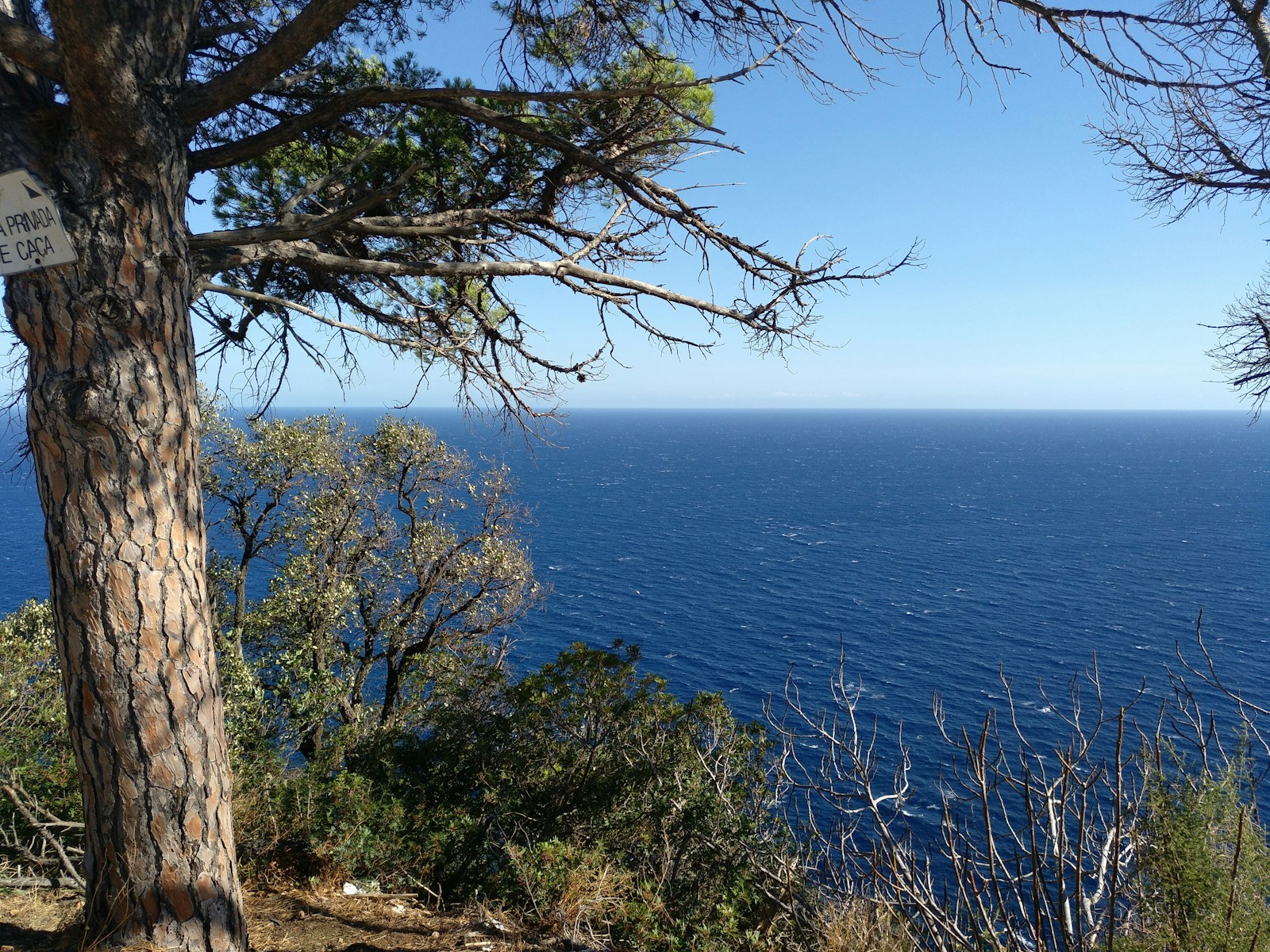
The camí de ronda never takes you far from the sea. Photo by Concha Mayo
Near Begur, the path becomes tougher. From Sa Riera to Aiguablava, it climbs and dips through pines, with steep stone steps down to coves such as Sa Tuna. These are the postcard coves, turquoise and framed by cliffs, reached only by foot or by a long drive down winding roads. The effort of the walk is rewarded with sudden openings onto water that looks almost unreal.
Further south, the section around S’Agaró is entirely different. Here the path was designed in the early 20th century as part of a garden city plan. It is wide, paved and lined with balustrades, curving gently between villas and the sea. Elegant rather than wild, it offers easy walking and views that unfold gracefully with every bend.
At the far north, near Cadaqués and the Cap de Creus, the camí de ronda turns raw. The wind is stronger, the rock sharper, the vegetation low and sparse. Walks here feel exposed, with the horizon stretching endlessly and the sense that you are at the very edge of the coast. It is less comfortable, but unforgettable.
These are just fragments of a much larger whole. Each stretch of the camí de ronda has its own mood — gentle, rugged, elegant, or wild — and part of the pleasure is choosing the piece that suits the day.
The camí de ronda, Costa Brava’s coastal path
For visitors, the camí de ronda is can be the simplest way to understand the Costa Brava. Coves hidden by cliffs, villages tucked behind harbours, stretches of rock where the wind has stripped everything bare. Walking ties them together.
The path holds history, but it also holds rhythm. Fishermen once used it to reach their boats; guards patrolled it to watch the frontier. Now it carries walkers in sandals, families with picnics, hikers tracing kilometres with sticks. The footsteps change, but the line is the same — always drawn by the sea.
What stays with you after the walk is not just the scenery, but the way the coast reveals itself slowly. A headland opens to a view you couldn’t see a minute before. A narrow turn delivers you to a beach too small for a road. Each step feels earned.
The Costa Brava is often remembered for its beaches, its summers, its crowds. The camí de ronda, Costa Brava’s coastal path, offers something different: time, movement, and a way of seeing the shoreline as a whole. It matters less how far you walk than that you walk at all. The coast feels different on foot, and that difference lingers long after you’ve left.