The best Costa Brava beaches offer more than sun and sea — they’re your invitation to discover Catalonia’s wild coast at its most authentic.
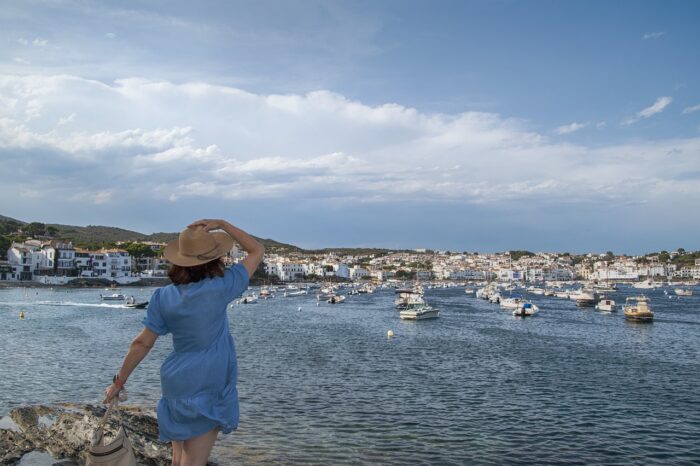
Cadaqués. Photo by ELG21
There’s something about the Costa Brava that catches you off guard. Perhaps it’s the sudden drop from pine-covered cliffs to sapphire water, or the way a fishing village appears at the end of a winding coastal road as if by accident. Stretching from Blanes to the French border, this “wild coast” lives up to its name — rugged, untamed, and endlessly surprising.
To locals, the best Costa Brava beaches are not only places to sunbathe but living memories — the smell of grilled sardines, the sound of cicadas at dusk, the cool slap of seawater after a long walk along the Camí de Ronda. Whether you seek hidden coves or lively seaside towns, the Costa Brava offers a rare mix of raw beauty and easy charm that seldom feels overdone.
Understanding the Costa Brava: What makes it ‘wild’
The name Costa Brava was first coined in 1908 by a Catalan journalist who described this stretch of coastline as “rugged and wild.” More than a century later, that phrase still fits. The landscape tumbles between steep cliffs and hidden coves, where pine trees lean over turquoise inlets and stone watchtowers stand guard above the sea.
Unlike many parts of the Mediterranean, the Costa Brava has largely managed to hold onto its character. While resort towns like Lloret de Mar attract holiday crowds, vast areas remain untouched — rocky headlands, fishing hamlets and nature reserves that have resisted the worst excesses of development. It’s this balance between accessibility and wilderness that gives the region its soul.
From the golden sands of Blanes to the wind-battered shores of Cap de Creus, the best Costa Brava beaches offer something for every mood. Some invite lazy afternoons and seafood lunches, while others reward those who venture off the beaten path with quiet solitude and a glimpse of the Catalonia that once was.
Southern Costa Brava: Beaches near Blanes and Lloret de Mar
At the southern gateway to the Costa Brava, the coast begins gently. Wide golden sands and calm seas make this stretch ideal for families and first-time visitors, yet even here the wild heart of Catalonia isn’t far away. The hills that rise behind Blanes and Lloret de Mar hide a handful of quiet coves where the crowds rarely reach.

Blanes – Cala Sant Francesc
Locally known as Cala Bona, this is one of Blanes’ most picturesque beaches. Sheltered by rocky arms and fringed by pines, its clear waters are perfect for swimming and snorkelling. Despite its popularity, it retains a local feel, especially early in the morning when fishermen’s boats still rest on the sand.
Lloret de Mar – Fenals Beach
Just a short walk from the bustle of Lloret’s main strip, Fenals feels worlds away. The beach curves in a calm bay backed by greenery, and while it offers full facilities, it’s far less frenetic than its neighbour. Families love its easy access, while walkers can follow the Camí de Ronda from here to smaller coves along the headland.
Hidden gem: Cala Boadella
Between Lloret and Blanes lies Cala Boadella, reached by a steep path through the pines. It’s smaller, quieter, and framed by sculpted rocks that seem to belong to another era. The water here is astonishingly clear, and the absence of bars or shops gives it an old-fashioned charm that feels increasingly rare.
The southern Costa Brava may be the most visited, but with a little curiosity you can still find beaches that feel secluded and personal — the kind that remind you why the coast is called brava in the first place.
Central Costa Brava: Between Tossa de Mar and Begur
Here the coastline begins to reveal its true character. Craggy cliffs plunge into translucent water, medieval villages overlook sandy coves, and pine forests perfume the air. The central Costa Brava has long been a favourite among Catalans themselves — a place where natural beauty meets quiet sophistication.
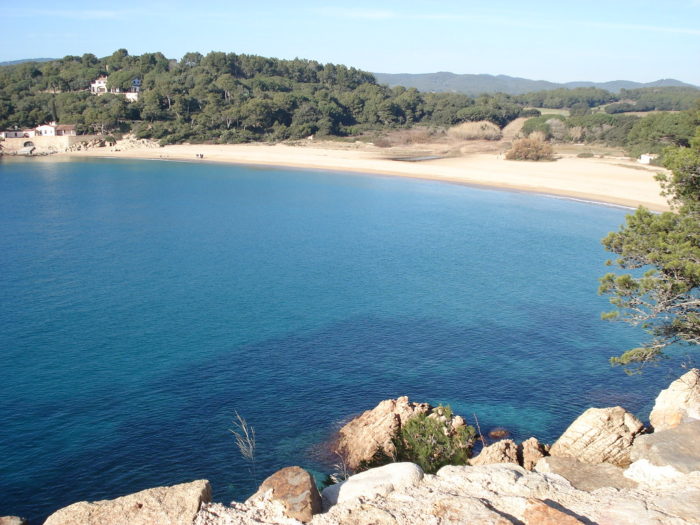
Platja Castell is one of the Costa Brava’s most pristine beaches. Photo by David Leigh
Tossa de Mar – Platja Gran and Cala Pola
The walled old town of Tossa de Mar rises directly above Platja Gran, one of the most photographed beaches in Spain. Its backdrop of medieval towers and fishing boats offers a postcard view of the Costa Brava’s past and present. A short walk north along the Camí de Ronda brings you to Cala Pola, a tiny cove framed by cliffs and pines, ideal for a swim away from the crowds.
Sant Feliu de Guíxols & S’Agaró – Cala Sa Conca
This elegant curve of sand lies just beyond S’Agaró’s graceful seafront villas. Cala Sa Conca offers calm, shallow waters and soft golden sand. It’s perfect for a leisurely morning, followed by lunch at a seafront restaurant serving grilled sardines and crisp white wine.
Palamós – Platja de Castell
Once threatened by development, Platja de Castell was saved by local residents who fought to keep it unspoilt. Today it’s one of the last stretches of virgin coastline in the region — no hotels, no concrete, just dunes, forest and sea. You can still see traces of an Iberian settlement on the nearby hill, a reminder of how long people have loved this bay.
Begur – Aiguablava, Sa Tuna and Aiguafreda
The beaches around Begur are the jewels of the central coast. Aiguablava glows turquoise even under cloud, while Sa Tuna and Aiguafreda hide beneath steep cliffs, their stone houses reflecting on calm water. Many families return year after year, drawn by the combination of small-town warmth and postcard-perfect scenery.
Begur also bears traces of its 19th-century emigrants who made fortunes in Cuba and returned to build elegant “indiano” mansions — a touch of the Caribbean in a Catalan seaside village.
Northern Costa Brava: From Empúries to Portbou
The further north you travel, the wilder the landscape becomes. Here the Costa Brava sheds any hint of polish, revealing bare rock, wind-bent pines and sea so clear it feels unreal. This is the region of salt air, tramuntana winds and small fishing coves that once inspired Salvador Dalí.
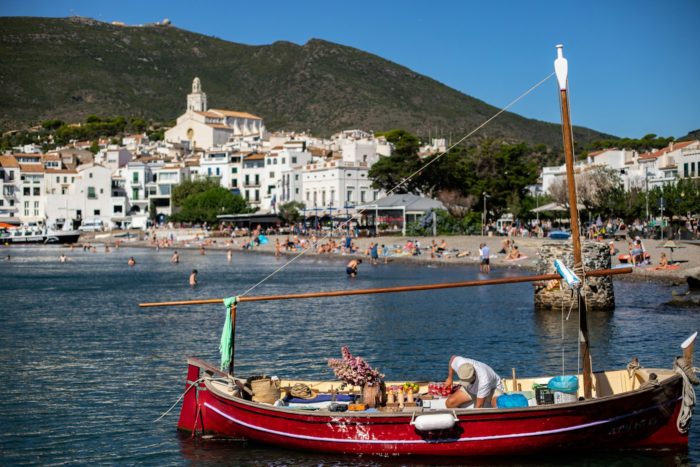
The picturesque village of Cadaqués. Photo by David Monje
Empúries – Platja les Muscleres
Right beside the Greek and Roman ruins of Empúries, Platja les Muscleres offers a broad sweep of pale sand with calm, shallow water ideal for families and relaxed swimmers. The beach sits directly below the archaeological site, so you can look up from the shoreline to see ancient walls and the remains of the old settlement. It’s a quiet, atmospheric place where the history of the site and the steady rhythm of the sea come together almost effortlessly.
Cadaqués – Platja del Ros and Portlligat
Cadaqués is a place that lingers in memory — whitewashed houses, cobbled lanes, and light that artists have tried to capture for generations. Platja del Ros sits just outside the town, a quiet spot with pebbles instead of sand and endless views of blue water. A short stroll north leads to Portlligat, where Dalí once lived; the bay remains as he left it, dotted with small boats and framed by olive trees.
Cap de Creus – Cala Tavallera, Cala Jugadora and Cala Culip
At Spain’s north-eastern tip, Cap de Creus feels almost lunar. The cliffs twist into bizarre shapes, and the sea surges between narrow inlets of black rock. Cala Jugadora and Cala Culip are two of the most striking coves — difficult to reach, but once there you might have them to yourself, save for the sound of waves echoing against the stone. Cala Tavallera is about as remote as you can get without leaving the mainland. You can reach it on foot along the Camí de Ronda or by boat from Cadaqués. The walk is demanding, but the reward is a tiny, untouched cove with astonishingly clear water and a view of nothing but sea and sky.
Portbou – Platja de les Tres Platgetes
Just before the French border lies Portbou, a quiet village caught between mountains and sea. Its small beach, divided into three tiny coves, has a raw, end-of-the-line atmosphere. Few tourists venture this far, but those who do find a sense of peace that perfectly captures the spirit of Catalonia’s wild coast.
Choosing your beach: What suits your style
With more than 200 kilometres of coastline, choosing among the best Costa Brava beaches can feel daunting. Each cove and bay has its own personality — some sociable and easy-going, others wild and introspective. A little local knowledge helps you find the right match for the kind of holiday you want.
For families
Look for gentle slopes, lifeguards, and easy parking. Cala Sant Francesc in Blanes and Aiguablava near Begur are perfect examples: calm, clear and well-serviced without losing their natural charm. Early mornings are quietest, and most have xiringuitos where you can grab lunch without packing a picnic.
For couples
Romance lives in the smaller coves — Sa Tuna, Cala Pola and Cala Boadella are ideal. Arrive late in the afternoon when the light softens and the sea turns glassy. A bottle of local Empordà wine and some olives are all you need for a simple sunset moment together.
For adventurers
Follow the Camí de Ronda, the old coastal path linking former watchpoints and fishing villages. You’ll stumble upon beaches unreachable by car, like Cala Tavallera or Cala Pedrosa. Bring sturdy shoes, water and curiosity — the route reveals corners of the coast that most visitors never see.
For nature lovers
Seek out Platja de Castell or the beaches of Cap de Creus. Both are protected areas where wildlife thrives and the air smells of pine and salt. If you prefer a slower pace, rent a kayak or paddleboard to explore hidden inlets at your own rhythm.
The beauty of the Costa Brava is that there’s no single perfect beach — just the one that fits your day, your mood, and the kind of peace you’re looking for.
Beach culture and etiquette on the Costa Brava
Part of what makes the Costa Brava so appealing is its relaxed rhythm — life here moves to the sound of waves and cicadas rather than the clock. Still, a little understanding of local customs helps you fit in naturally and enjoy the beaches as Catalans do.
A laid-back way of life
Beach days here start late and finish even later. Locals often arrive mid-morning, linger over lunch, and stay until the sun dips behind the cliffs. You’ll see families setting up picnics under the pines while friends share seafood paella at a xiringuito, the simple beach bars found all along the coast.
Dress and etiquette
Topless sunbathing is common across most beaches, while a few smaller coves, such as Cala Boadella or parts of Cap de Creus, are naturist. People are relaxed but discreet — loud music or large groups are frowned upon, especially in quieter areas. Always take your rubbish with you and avoid trampling the vegetation that helps prevent erosion.
Respecting nature
Many of the best Costa Brava beaches fall within protected zones, especially around Platja de Castell and Cap de Creus. Anchoring boats or using soap in the sea is forbidden, and fires or barbecues are never allowed. It’s a small price to pay for the chance to enjoy these places as they’ve looked for generations.
Eating by the sea
Few pleasures compare to lunch by the water. Try grilled sardines, suquet de peix (a local fish stew) or pa amb tomàquet with anchovies. Each beach seems to have its own speciality, and most seaside restaurants welcome sandy feet and sunburnt shoulders.
Respect and restraint go a long way here — share the space, savour the view, and leave nothing behind but footprints.
The magic of Catalonia’s wild coast
What lingers most after a journey along the Costa Brava isn’t a single beach or postcard view, but the feeling the coast leaves with you. It’s the hush of early morning when the sea is flat as glass, the scent of pine on a hot afternoon, the light that turns gold as evening falls.
The best Costa Brava beaches leave their mark in quiet, memorable ways. A swim in Cala Pola after a long walk, a lazy lunch in Begur, a glass of wine as the sun sinks behind Cap de Creus. Each place carries a memory of the region’s spirit: wild yet welcoming, proud yet unpretentious.
This is what makes Catalonia’s wild coast so special. It’s a landscape that still feels alive, shaped by wind and water rather than by time. Once you’ve stood barefoot on its sand and watched the horizon blur into blue, you’ll understand why so many people come here for a holiday — and leave already planning to return.