A Costa Brava itinerary designed for travellers who prefer unhurried days, good meals and authentic places.
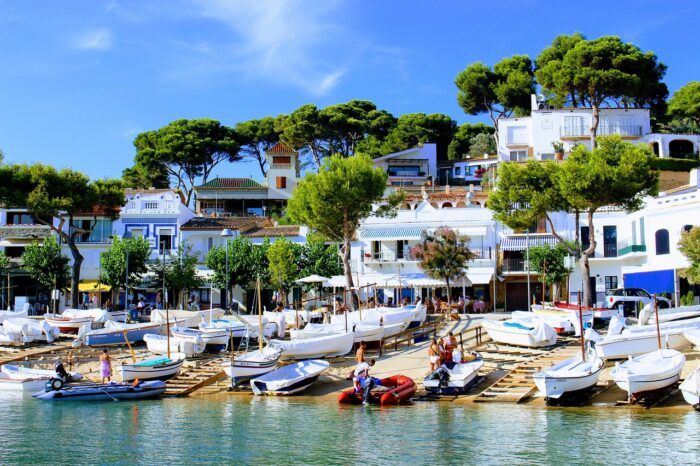
Boats on the beach at Llafranc. Photo by lloydcl2.
If you follow the coast north from Barcelona, there’s a moment when the scenery begins to change. The beaches tighten into coves, cliffs rise, and pine trees lean towards a sea that shifts from steel blue to clear turquoise. This is the Costa Brava — a region of small fishing towns, medieval villages and winding coastal paths where every turn seems to hide a view worth stopping for.
Spending a week here isn’t about racing through a checklist of sights. The Costa Brava rewards the traveller who slows down, who lingers over a seaside lunch or takes a wrong turn just to see where it leads. The rhythm of this coastline invites you to balance exploration with ease — a morning swim, a lazy drive through the hills, a glass of Empordà wine as the day fades.
For many visitors, the hardest part is knowing where to begin. There’s no shortage of beauty — just a shortage of time. That’s where this Costa Brava itinerary comes in: a relaxed seven-day route designed to capture the best of the region without feeling hurried. From the soft sands near Blanes to the wild headlands around Cadaqués, it combines the coast’s headline moments with its quieter, more authentic corners.
Before you go – planning your Costa Brava itinerary
Before setting off, a little preparation makes the week flow more easily. The Costa Brava stretches for roughly 200 kilometres, from the town of Blanes in the south to the French border in the north, and the terrain shifts noticeably along the way. Knowing when to travel, how to get around, and where to stay helps you make the most of your time.
When to visit
Late spring and early autumn are the most rewarding periods for this Costa Brava itinerary. From June to early July, the weather is warm enough for swimming but the beaches are quieter. September and early October bring gentle temperatures and fewer crowds, especially in the villages around Begur and Cadaqués. August is the busiest month, when local families and international visitors fill the coast.
Getting around
To follow this itinerary comfortably, hiring a car is best. The coastal and inland roads are straightforward and well signposted, and a car gives you freedom to stop at viewpoints or small towns. Allow about 40 minutes to drive between the main sections of the route. Public transport exists, but connections between smaller villages can be slow and limited outside summer.
Where to base yourself
For a seven-day trip, plan to stay in two or three places. Tossa de Mar makes a good first stop for the southern section. Begur or Calella de Palafrugell are ideal for the central stretch, and Cadaqués works well at the northern end. Travelling this way avoids unnecessary backtracking while giving a sense of progression up the coast.
What to pack
The Costa Brava’s mix of beach, countryside and hilltop villages means packing light but varied. Comfortable shoes for walking, swimwear, a hat, and sun protection are essentials. Bring a light jumper for cooler evenings, especially near the sea. A small daypack and refillable water bottle are practical for short walks or market visits.
With these basics covered, you’ll be ready to follow the coast at an easy pace — starting in the south where the Costa Brava first begins to show its character.
Day 1–2: Discovering the southern Costa Brava – Blanes to Tossa de Mar
The southern stretch of the Costa Brava offers a gentle start to the journey. It’s close enough to Barcelona to reach within a couple of hours, yet already feels far removed from city life. Here, you’ll find a mix of broad sandy beaches, pine-framed coves and medieval fortifications overlooking the sea.
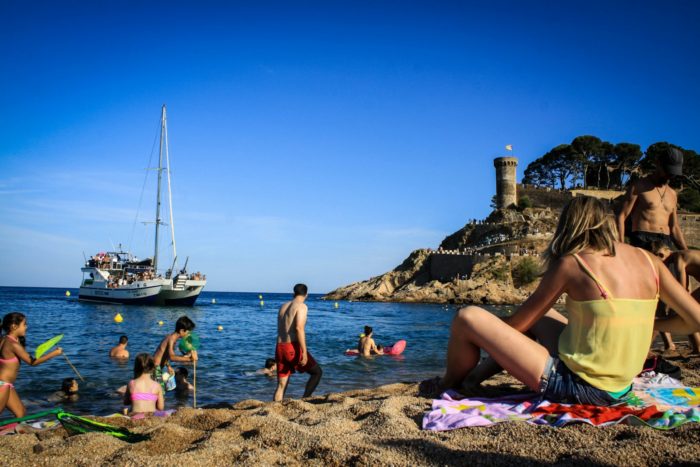
Tossa de Mar’s main beach: Photo by Andrea Huls Pareja.
Morning: Arrival in Blanes
Begin your trip in Blanes, often described as the gateway to the Costa Brava. The town has a working harbour and a lived-in feel that contrasts with the resorts further south. Its main attraction, the Marimurtra Botanical Garden, sits on the cliffs above the sea and offers sweeping views of the coastline. It’s a calm place to shake off the journey and get your bearings.
Afternoon: Coastal drive to Tossa de Mar
From Blanes, the GI-682 winds north through pine forest and along headlands towards Tossa de Mar. It’s a short drive—around 20 kilometres—but worth taking slowly. There are several lookout points and small coves, such as Cala Sant Francesc, where you can pause for a swim or coffee.
Arriving in Tossa de Mar, the walled old town known as the Vila Vella rises directly above the bay. Narrow cobbled lanes lead to stone watchtowers and viewpoints with some of the best panoramas on the southern coast. Unlike many seaside towns, Tossa still retains traces of its fishing past, and the beach sits directly below the ancient walls.
Evening: Dinner by the sea
Seafood dominates menus here. Look for suquet de peix, a Catalan fish stew thickened with almonds, or rice dishes cooked in broth rather than paella style. Restaurants along the seafront are lively in the evenings, but smaller family-run places within the old town often serve the most carefully prepared meals.
Stay
Tossa de Mar offers plenty of mid-range hotels and small guesthouses within walking distance of the beach. Choose accommodation near the old town if you enjoy an evening stroll, or a hillside hotel with parking and sea views if you prefer quiet.
These first two days set the rhythm for the week — relaxed mornings, unhurried drives and enough time in each place to see it properly.
Day 3: Medieval villages and inland discoveries
After a couple of days by the sea, the inland landscape of the Costa Brava offers a change of mood. Rolling farmland, vineyards and stone villages lie only a short drive from the coast but feel a world apart. The roads between them are quiet and scenic, making this one of the most enjoyable days of the itinerary.
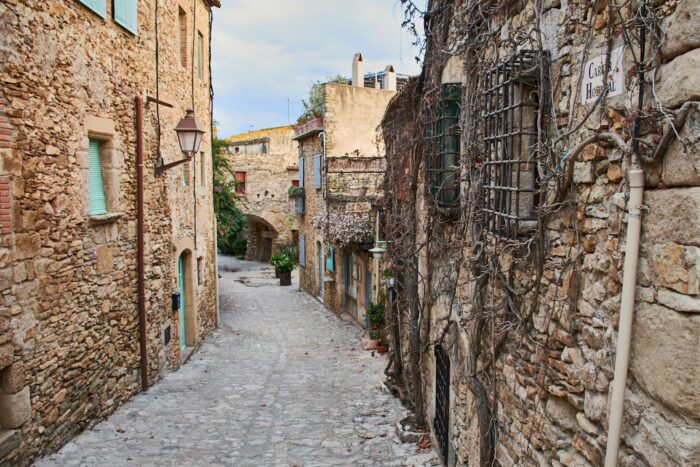
A street in Peratallada. Photo by Héctor J. Rivas
Morning: Pals and Peratallada
Set off towards Pals, around an hour’s drive north from Tossa de Mar. The village stands on a small hill overlooking the Empordà plain and is best explored on foot. Its medieval centre, with towers, archways and narrow lanes, has been carefully restored without losing its atmosphere. Early morning is ideal, before the day-trippers arrive.
From Pals, it’s a ten-minute drive to Peratallada, a compact village encircled by defensive walls. The honey-coloured stone glows in the sunlight, and many of the buildings are now home to small shops and cafés. Stop for a coffee in the main square or pick up local ceramics as a souvenir.
Lunch stop: countryside dining
Between Pals and Begur you’ll find traditional masia restaurants — old farmhouses serving regional dishes such as grilled meat, escudella stew or rabbit with garlic. Many offer set menus at lunchtime that are excellent value. If you prefer something outdoors, there are vineyards nearby where you can pre-book a picnic and sample Empordà wines.
Afternoon: gentle exploration
Spend the afternoon exploring the countryside at your own pace. The Iberian settlement of Ullastret gives an insight into life before Roman times and has a small but well-presented museum. Alternatively, hire a bicycle and follow the flat lanes through rice fields towards the coast, stopping at quiet viewpoints along the way.
Stay
You can either return to the coast in the evening or spend the night inland. Several boutique hotels and converted farmhouses around Begur offer peaceful stays with easy access to both the countryside and the beaches for the next stage of the trip.
Day 4–5: Begur, Calella de Palafrugell and the coves of the central coast
These two days cover the most recognisable stretch of the Costa Brava, where wooded headlands give way to clear water coves and whitewashed fishing villages. The pace slows naturally here, with mornings spent walking or swimming and afternoons drifting between beaches and terrace cafés.
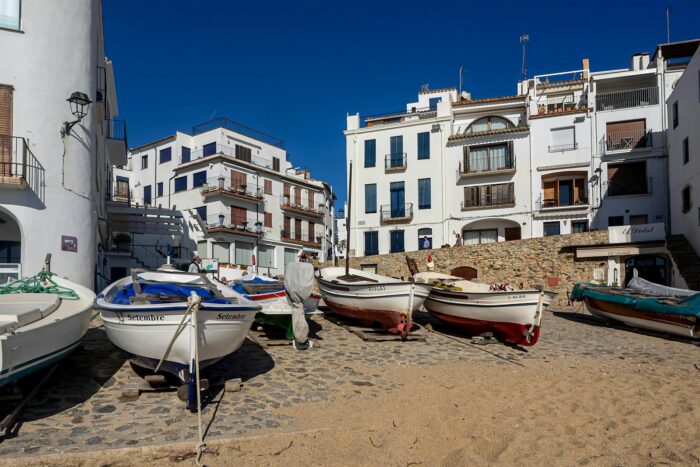
Boats on the beach in Calella de Palafrugell. Photo by Manuel Torres Garcia.
Morning: coastal path walk
Start from Calella de Palafrugell, one of the most photogenic towns on the coast. Follow the Camí de Ronda, the historic coastal path once used by fishermen and customs officers. The route from Calella to Llafranc takes about half an hour each way, passing small coves framed by pines and rocky cliffs. The walk is easy, with plenty of places to stop for a swim.
Lunch: seaside simplicity
Both Calella and Llafranc have beachside restaurants where tables spill onto the sand. Order a light lunch of grilled sardines, pa de tomàquet – bead with tomato and olive oil – and a glass of chilled white wine from the local Empordà region. It’s the kind of meal that captures what’s best about this part of Catalonia: simple, local and unhurried.
Afternoon: beaches and gardens
Spend the afternoon exploring nearby coves such as Platja del Castell, one of the last undeveloped beaches on the central coast, or Aigua Blava, known for its turquoise shallows. If you prefer something cultural, visit the Cap Roig Gardens just outside Calella. The terraced gardens overlook the sea and host a well-known summer music festival.
Cultural stop: a touch of local history
Inland, Palafrugell’s Cork Museum tells the story of the area’s former industry and is a quick but interesting diversion. The old factories have been converted into exhibition spaces, showing how cork from the local forests once supplied much of Europe’s wine trade.
Evening: relaxed evenings in Begur
As evening falls, head to Begur, a hilltop town with winding streets and small squares surrounded by 19th-century houses. Many belonged to locals who emigrated to Cuba and returned with Caribbean influences visible in the architecture. The town’s restaurants and bars are lively but not crowded, making it a pleasant place to spend two nights.
Stay
Choose accommodation in or around Begur — there are stylish boutique hotels and rural guesthouses within short driving distance of several beaches. Staying here allows easy access to both inland villages and coastal paths.
Day 6: Cadaqués and the wild Cap de Creus
The northern tip of the Costa Brava feels different from the rest of the coast — starker, wind-shaped and less polished. The road to Cadaqués twists through olive groves and over dry hills before revealing a small bay filled with whitewashed houses and fishing boats. It’s one of the most distinctive towns in Catalonia and worth the longer drive to reach.
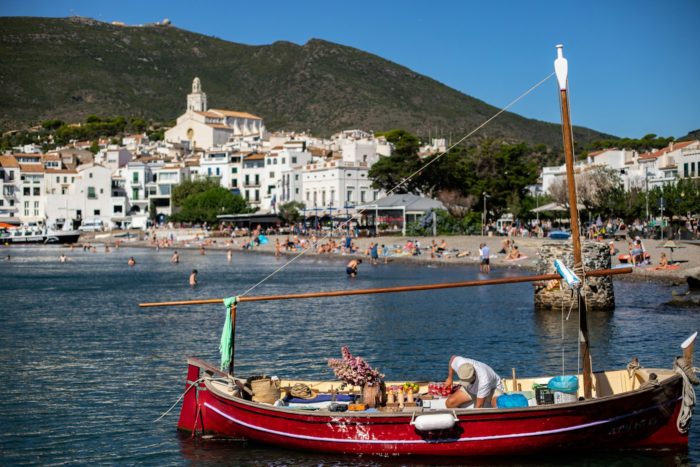
The picturesque village of Cadaqués: Photo by David Monje
Morning: exploring Cadaqués
Arrive early if you can, before the day visitors. The best way to see Cadaqués is on foot: stroll through the narrow lanes, where the stone-paved streets rise and fall towards the harbour. The Church of Santa Maria offers a good view over the rooftops, and the small art galleries scattered through the old town reflect the village’s creative past.
Lunch: by the water
Cadaqués has several excellent seafront restaurants serving freshly caught fish and shellfish. Look for arròs negre (rice with cuttlefish and squid ink) or grilled sardines, and a bottle of crisp white wine from the nearby Cap de Creus vineyards. The atmosphere is easy-going, with locals and visitors sharing the same terraces.
Afternoon: Dalí’s world and the headland
A short walk or drive east brings you to Portlligat, where Salvador Dalí lived for much of his life. His house, now a museum, preserves the eccentric layout he designed himself, full of found objects and seaside views. Beyond that, the Cap de Creus Natural Park is the most dramatic landscape on the Costa Brava — bare rock, twisted pines and small coves reached by rough tracks. If the weather is calm, you can swim in Cala Jugadora or take a short walk to the lighthouse at the headland.
Evening: quiet reflections
Cadaqués is best appreciated after sunset, when the day-trippers have gone and the lights shimmer on the bay. Find a table near the waterfront for a final drink or stroll along the promenade. It’s a peaceful way to end the longest day of the journey.
Stay
Spend the night in Cadaqués to avoid backtracking. Small hotels and guesthouses cluster around the old town, and many have terraces overlooking the sea. The next morning’s drive inland to Figueres is straightforward.
Day 7: Figueres and farewell
Your final day offers a change of pace before the journey home. Leaving the coast behind, the route turns inland towards Figueres, the main town of the Alt Empordà region. It’s most famous as the birthplace of Salvador Dalí, but there’s more to see here than surrealism alone.
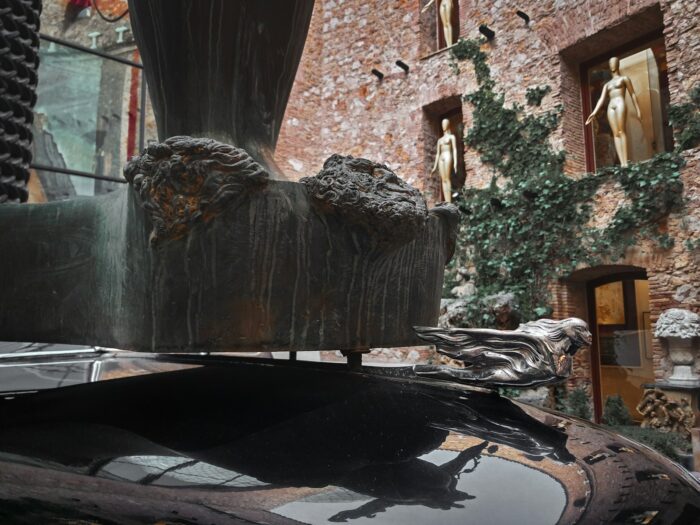
The Dalí Theatre-Museum in Figueres. Photo by flickch
Morning: Dalí Theatre-Museum
The Dalí Theatre-Museum dominates central Figueres and is one of Spain’s most visited art museums. Even if you’re not an art devotee, the building itself is worth the trip. Designed by Dalí in the 1970s on the ruins of the town’s old theatre, it’s filled with optical illusions, sculptures and installations that give a direct glimpse into his imagination. It’s wise to book tickets in advance, especially in summer.
Lunch: Catalan flavours
For lunch, look for a restaurant serving modern Catalan cooking — places that treat local ingredients with a lighter hand. Seasonal dishes such as roast lamb, wild mushrooms or seafood rice feature on many menus. If you prefer a picnic, several food markets in Figueres sell local cheeses, cured meats and olives.
Afternoon: return journey
Depending on your flight or travel plans, you can take a final detour before heading south. The Empordà wine region has small wineries offering tastings, often by appointment, and the countryside here is quiet and easy to explore. Girona Airport is just over an hour’s drive away, while Barcelona takes around two hours.
Wrap-up
A week on the Costa Brava passes quickly, but the variety of landscapes — from the gentle bays near Blanes to the rugged headlands of Cap de Creus — makes it feel much longer. Travelling north along the coast offers a clear sense of the region’s character: a mix of sea, history and unforced charm that stays with you long after you’ve left.
Final thoughts – a week well spent on the Costa Brava
Travelling the Costa Brava from south to north over a week reveals how varied this coastline is. In the space of a few days you move from soft, family-friendly beaches to hidden coves, from fortified hill towns to whitewashed fishing villages. The distances are short, but each area has its own rhythm and character.
What stands out most is the balance between natural beauty and lived-in charm. The region hasn’t lost its sense of scale; fishing boats still sit on the sand beside small restaurants, and village squares fill slowly in the evenings with locals meeting for a drink. Even in the more visited places, there are always quiet corners if you know where to look.
A week gives you enough time to find those moments — a morning swim before breakfast, an unplanned stop at a viewpoint, a meal that lasts a little longer than expected. Whether you follow this Costa Brava itinerary exactly or use it as a framework, it’s a route that encourages steady travel rather than speed. The reward is a clearer picture of what makes this stretch of coast so distinctive: not grand gestures, but a steady collection of small, memorable days.