The Costa Brava in summer becomes a stage of crowded sands, late nights and skies that refuse to dim.
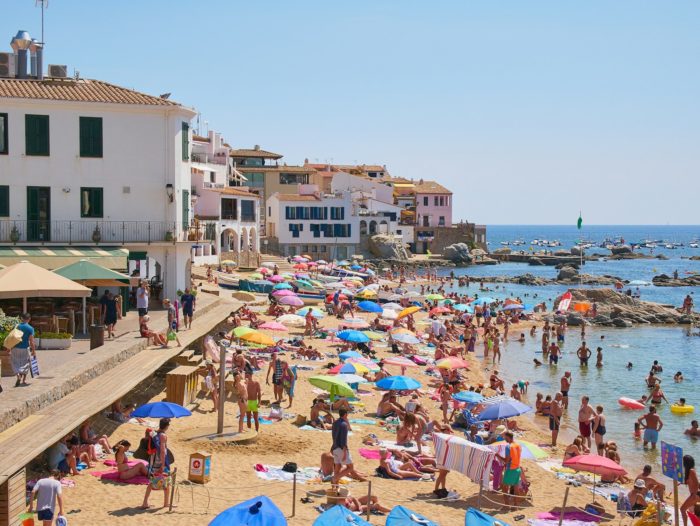
Photo by Unexpected Catalonia
Summer doesn’t creep onto the Costa Brava. It arrives all at once — sudden, loud, and impossible to ignore. By the time July begins, the beaches are carpeted in parasols, the car parks overflow by mid-morning, and the smell of sunscreen and grilled sardines hangs in the air. Evenings stretch until midnight, but mornings begin early, with families already staking their patch of sand before the sun grows too fierce.
For visitors, the contrast with other seasons is startling. Towns that were hushed in March or half-shuttered in November are now wide awake. Markets are packed, xiringuitos buzz from lunchtime through to last orders, and every street seems to carry the noise of children, scooters, and music drifting from somewhere. It’s messy, it’s crowded, but it’s alive.
The energy is addictive. You might find yourself standing on the promenade in Palamós or Platja d’Aro at dusk, watching the light fade while people pour into the streets — strollers, groups of teenagers, couples walking slowly hand in hand. The smell of cooking rises from balconies, while beach bars kick into their second wind with cold beer and music. There’s no sense of winding down. If anything, the day is only just beginning.
This is the Costa Brava at its fullest. Hot, busy, noisy, and unapologetic. Visitors don’t come here in summer to find quiet. They come for the spectacle of it all — the sense of being part of a season that burns brightly, exhausts itself, and disappears almost as suddenly as it began.
The weather and the heat
If spring was unpredictable, summer is relentless. By late June the warmth has settled in, and by July and August it’s no longer warmth but heat — thick, humid, and constant. Afternoons can feel heavy even in the shade, and nights often stay sticky unless you’re right on the coast with a breeze.
Visitors often underestimate it. The sun here is stronger than it looks, and it’s not unusual to see pink shoulders and peeling noses after a single morning on the beach. Locals take it as common sense: hats, long lunches in the shade, and nothing important planned for mid-afternoon. Visitors often learn the hard way.
June still has balance. The sea is warm enough to swim but not hot, the evenings pleasant, and the mornings calm. It’s the month when walking the Cami de Ronda still feels possible without a 6am start. By July, that possibility has gone. The rhythm shifts around the heat: mornings by the sea, siesta after lunch, late dinners when the air finally cools.
Every so often the tramuntana blows down into the north, scouring the sky clear and dropping the humidity. Those days feel like a reprieve, the horizon suddenly sharp, the Pyrenees visible in the distance. But they don’t last long. Most days, the air is heavy, the light harsh, and the beaches crowded until dusk.
The weather sets the tone. It dictates when you eat, where you sit, and how you move. You don’t beat it; you learn to bend around it. For visitors, that adjustment is part of the summer experience.
The crowds and the rhythm of summer life
By July, the Costa Brava is at full capacity. Beaches fill by mid-morning, and by noon they’re dense with parasols, towels, and the sound of children calling across the water. Car parks overflow, and drivers circle slowly in hope of a space. On the coastal roads, traffic crawls in single file, the sharp bends clogged with day-trippers heading for the same small coves.
The rhythm of daily life bends to the crowd. Markets are packed shoulder-to-shoulder, especially on Saturdays, stalls piled high with fruit, sandals, and beach toys. Restaurants take reservations for two or even three sittings, waiters weaving between tables with trays of paella and ice-cold beer. Even a simple coffee can take longer, not because anyone is slow, but because everyone is busy.
There’s no real silence. Music drifts from balconies, scooters rattle through narrow streets, and the murmur of conversation – and laughter – carries late into the night. Depending on where you are staying, the buzz can be constant, from breakfast until past midnight. For visitors, this is part of the appeal: the sense of being caught in the middle of something bigger than yourself, a season lived at full tilt.
Yet within the crowd there are moments of calm. Early in the morning, when the sand is still cool and the sea flat, you might find only a few joggers and fishermen. At sunset, when the families drift home for showers and the lights begin to glow on the promenade, the pace eases into something slower, more sociable. That’s when visitors stroll, eat ice cream, watch children run in circles, and wait for the night to begin.
Summer here isn’t just heat and beaches. It’s the collective rhythm of thousands of people living side by side for a few weeks, sharing the same small towns and narrow roads. For many visitors, that shared energy is exactly the point.
Eating in high season
Food in summer is lighter, fresher, and built for the heat. By midday, restaurants along the seafront are carrying out pans of paella and fideuà, the smell of seafood and saffron drifting across the terrace. Grilled sardines appear on menus, salty and hot. Cold dishes hold their own too: gazpacho, salmorejo, and simple salads of tomatoes and onions dressed only with oil and salt.
Fruit stalls brim with watermelon, peaches, melons and nectarines. Visitors buy them whole, then slice them up on a beach towel or eat them straight from the fridge in rented apartments. Tomatoes peak now too — the kind that need little more than bread, olive oil and a pinch of salt to make a meal.
The xiringuitos, or beach bars, come into their own. By day they serve coffees, sandwiches and cold drinks to beachgoers; by night they switch to music, cocktails and long evenings under string lights. For many visitors, these places become landmarks of a holiday — the spot where the children run barefoot, where the adults lean back with a beer, where the sand clings to your feet all the way home.
Drinks follow the same rhythm. Beer and rosat dominate the hot afternoons, served ice cold, bottles sweating on the table. Families order litres of water without embarrassment, drained before the food arrives. After dinner, small glasses of moscatell or a shared cocktail stretch the night.
Eating here in summer is as much about timing as food. Lunch starts late and runs long; dinner later still, often after ten. For visitors it can feel unusual at first, but quickly it becomes habit — part of slipping into the season’s rhythm.
What to do — or not do — in the heat
Summer days on the Costa Brava are ruled by the sun. By late morning the heat presses down hard, and the only real relief is the water. Visitors fill the sea with paddleboards, snorkels, inflatables, and pedal boats. Children play endless games of catch, adults float on their backs, and the sound of splashing never stops. Sailing boats anchor in quiet coves, their decks dotted with sunbathers escaping the beaches.
The Cami de Ronda, so inviting in spring, is mostly abandoned by midday. The exposed paths and cliffside steps are punishing under full sun. The few who walk them are out at dawn, or waiting until the last light of evening when the heat softens. Inland, the hills stay empty until autumn.
Afternoons aren’t for activity. They’re for shade, naps, and stillness. Visitors quickly learn the sense in this: shutters closed, fans whirring, long lunches followed by nothing much at all. Streets go quiet, except for the hum of cicadas. It’s not laziness — it’s survival.
But when the sun dips, everything changes. Evenings belong to people. Visitors stroll the promenades with ice creams, children run in circles, and restaurants fill again. There are concerts in town squares, open-air cinema, and beach bars stringing lights between poles as music starts up. The rhythm flips: what was impossible at two in the afternoon becomes irresistible at ten at night.
In summer, doing nothing is just as much a part of the plan as doing everything. You spend the day slowing down so you can spend the night catching up.
Festivals and traditions
Summer isn’t just beaches and heat — it’s also when the Costa Brava fills with festivals, some centuries old, others barely a decade. For visitors, these are often the most memorable moments of a trip: the sudden burst of music in a square, the smell of food stalls drifting through narrow streets, the feeling of being swept up in something larger than yourself.
The season starts with Sant Joan in late June. Bonfires are lit, the sky fills with fireworks, and families stay on the beach until dawn. Visitors join locals for coca de Sant Joan — sweet flatbread with candied fruit — and midnight swims that are more ritual than refreshment. It’s loud, messy, and unforgettable, a wild welcome to the summer.
Almost every town has its Festa Major, usually between July and August. These “big festivals” mix traditional and modern: sardanes (the Catalan circle dance) in the square in the evening, live bands or DJs on temporary stages by night. Fireworks are common, sometimes closing the celebration with bursts of colour over the sea.
Some traditions are quieter but no less evocative. In Calella de Palafrugell, the annual Havaneres festival fills the seafront with sailor songs, a chorus of voices rising with the waves. Glasses of cremat — rum set alight with sugar, lemon peel and coffee beans — are passed through the crowd. For many visitors, this feels like stepping into something timeless.
Festivals here aren’t staged for tourists; they’re part of the fabric of summer. But visitors are welcome in the mix, drawn into the rhythm of late nights, music, and celebration that defines the season.
The other side of summer for visitors
For all its beauty and energy, summer on the Costa Brava can also test patience. Visitors soon learn that the postcards don’t show the traffic jams, the crowded beaches, or the scramble for parking. A drive that takes twenty minutes in winter can stretch to an hour or more in August, especially on the winding coastal roads. By the time you find a space, the heat is already pressing down.
Queues are part of the season too. Queues for ice cream, queues for the market, queues for a table at lunch. Even the supermarket feels like an event in midsummer, with baskets piled high and trolleys nudging each other in the aisles. For visitors, this becomes part of the rhythm.
The heat itself can be overwhelming. Afternoons make sightseeing almost impossible. Churches and museums are cool refuges, but most people give in and retreat indoors until evening.
Prices climb as well. Restaurants raise their menus, hotels and apartments charge their highest rates, and even simple things — sun loungers, parking, a sandwich on the beach — feel inflated. Visitors know it, accept it, and often come back anyway.
Because despite all this, summer is still what most people imagine when they think of the Costa Brava. The light, the noise, the food, the water — it adds up to something more than its inconveniences. Visitors leave sunburned, tired, sometimes a little exasperated, but also with memories of nights that went too late, meals that tasted better than they should have, and a sense of having been part of something bigger than themselves.
A season of excess
Summer on the Costa Brava doesn’t do balance. It’s a season of excess: too hot, too busy, too loud, too crowded — and yet, for many visitors, exactly what they want. The beaches are full, the nights are long, and the days blur into a rhythm of salt, sun and late dinners.
It isn’t subtle. The heat is relentless, the towns are overflowing, and every sense feels crowded. But that’s part of the appeal. For visitors, this is the Costa Brava at its most vivid, a place where every day has colour and movement, where nothing is left half-done.
And then, just as suddenly as it began, it’s gone. September comes, schools reopen, and the crowds vanish almost overnight. The towns shrink back, the beaches empty, and the sea belongs once again to fishermen and dog walkers. Visitors leave with peeling skin, heavy photo albums, and the lingering memory of a season that doesn’t hold back.
Summer here is not about moderation. It’s about being caught in the middle of it, surrendering to its pace, and letting it exhaust you. For many who come, that’s the point.