Even if you’re looking for a Costa Brava that’s low-key and local, you’ll never be short of things to do.
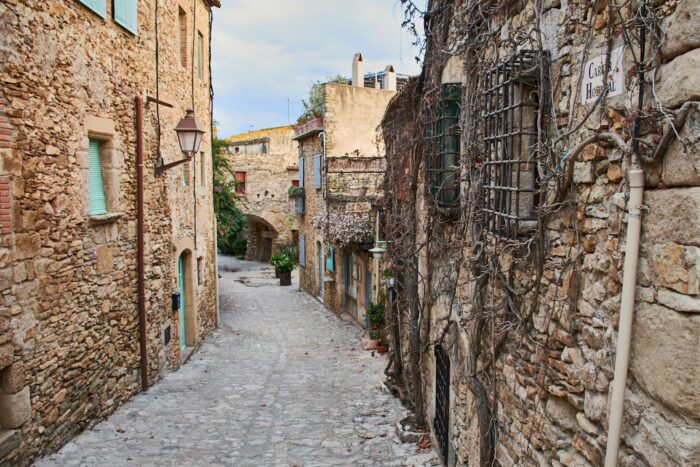
A street in Peratallada. Photo by Héctor J. Rivas
The Costa Brava has sometimes been typecast as a land of sun loungers and sangria, where package holidays meet postcard beaches. But behind the brochures lies a different coastline and if you know where to look, the Costa Brava still rewards curiosity.
This is not a list of things to tick off in three days. It’s a guide to slowing down and seeing the parts of the region that haven’t been polished for tourist photos. A mix of old towns, unspoilt beaches, everyday markets and forgotten roads. Places where life still moves at its own pace.
So, whether you’re travelling for the first time or coming back for more, here are some of the best things to do beyond the Costa Brava’s well trodden tourist trail.
Visit medieval towns that haven’t been Insta-flooded
The Costa Brava is full of towns with cobbled streets and crooked shutters — but some are still allowed to feel like places rather than film sets. Away from the coast you’ll find medieval villages that have kept their shape without losing their soul. They’re not just pretty facades for holiday photos. People live here, hang out washing here, sit outside the bar with a glass of vermut on Sunday afternoons. It’s quiet, yes — but quietly alive.
Peratallada
Possibly the most photogenic of the bunch, Peratallada is all golden stone and gentle curves. But unlike some of its more famous neighbours, it hasn’t been drowned by day-trippers. There are a few small restaurants tucked behind archways, some run by the same families for decades. Stop for a long lunch and let the day drift. You’ll leave full but still curious.
Pals
More on the radar, yes — but still worth it. Pals is beautifully preserved, from its hilltop tower to its winding streets. Head up to the Mirador Josep Pla for wide views over the Empordà plain, then walk down past quiet houses where geraniums spill from every windowsill.
Ullastret
Fewer visitors make it this far, but Ullastret is a gem if you like your history old — really old. Beyond the village itself is an archaeological site with remains of an Iberian settlement dating back over 2,500 years. The village has a lived-in feel: stone buildings with no information signs, a quiet main square where time slips a little. If you stay for a coffee, you may well be the only outsider in sight.
Llagostera
As you drive towards Llagostera you see the old stone church towering above everything else, a landmark that tells you there’s a proper old town tucked in behind the newer buildings. When you arrive you’ll find a small museum and a well-preserved medieval core, but you won’t find much in the way of souvenirs or signage. Locals know it more for its mushrooms and for its steady, everyday rhythm. It’s a good place to stop for a coffee and a quiet walk. Just let the place show itself.
Monells
Monells is the first of two villages tucked into the Gavarres foothills that are often missed. They’re the kind of places where you park the car, walk five minutes, and immediately slow down. It has a photogenic central square with arches and cafes. It’s been used as a film set, but still feels like a village rather than a backdrop.
Madremanya
The other is Madremanya, just up the road and quieter still. There you’ll find a handful of stone buildings, narrow lanes and a sense that nothing much happens here in a hurry.
La Bisbal d’Empordà
You may already have passed through La Bisbal for its Friday market or ceramics shops, but it’s worth a proper stop. The town straddles the line between the coast and the countryside, and once you’re away from the main road, the centre has real character. Take a stroll through the old Jewish quarter, visit the Terracotta Ceramics Museum, or follow one of the walking trails into the surrounding hills. There’s good food here too, traditional cooking that doesn’t try too hard.
???? Local tips
- Go early or late — midday tends to bring tour groups, even to the quieter spots
- Park outside the historic centres and walk in — it’s part of the rhythm
- Don’t rush — these places aren’t for rushing
Hike coastal paths where you’ll only meet locals and lizards
The Costa Brava’s coastline is famously rugged, all rocky headlands, pine trees and secret coves. And while the big-name sections of the Camí de Ronda (the old coastal path) draw plenty of traffic, other stretches stay remarkably quiet.
Llafranc to Tamariu
This stretch is a favourite with locals — scenic, shaded and not too long. Starting in Llafranc, the path winds through pine forest, over rocky bluffs and past hidden coves, eventually dropping down into the small bay of Tamariu. It’s not a flat walk, but it’s manageable. Along the way, you’ll pass Cala Pedrosa, a wild little beach with space for maybe a dozen people. Bring water and something to eat, or aim to arrive hungry: Tamariu has a handful of solid lunch spots, none of them flashy.
S’Agaró to Platja d’Aro
This section of the path is more manicured, with old villas and stone staircases overlooking the sea, but it’s still largely peaceful outside high summer. The route starts in S’Agaró and traces the shoreline past coves and headlands into the busier town of Platja d’Aro. Stop at Cala Sa Conca along the way for a swim. The beach is bigger than most and easy to reach, but still feels separate from the crowds. It’s also a good place to pause and remember why people started coming to this coast in the first place: not for clubs or resorts, but for these views, these swims, this light.
???? Tips for walking the Camí de Ronda
- Start early or late: Avoid the midday heat, especially in summerFootwear: You don’t need hiking gear, but proper shoes help — some paths are rocky or steep
- Pack light: Bring water, sun protection, and a swimsuit — you’ll probably want to stop for a dip
- Check the wind: Tramuntana winds can make exposed sections feel wilder than expected
Explore markets where people actually do their weekly shop
There’s a market in almost every town along the Costa Brava, and most of them still serve their original purpose: to feed the people who live there. You’ll find stalls selling plastic buckets and discount socks, but also ripe fruit, local cheese, fresh fish and the kind of tomatoes that actually smell like tomatoes. If you want to feel the rhythm of a place — not just look at it — markets are still one of the best ways in.
Palafrugell (Sunday)
One of the region’s most consistent markets, Palafrugell is properly local. The food stalls sprawl out from the covered market building and into the surrounding streets, especially on Sunday mornings. It’s busy, sometimes elbow-to-elbow, but never unfriendly. Expect seasonal produce, olives in bulk, and stallholders who will happily tell you which peaches are ready now and which need a day.
Figueres (Tuesday and Thursday)
Better known for the Dalí museum, Figueres also hosts a solid twice-weekly market. It fills the Rambla and side streets with everything from kitchen knives to cabbages. It’s noisier, bigger, and a little scruffier than some, but all the better for it.
La Bisbal d’Empordà (Friday)
La Bisbal is known for ceramics, but on Fridays it’s also home to one of the more down-to-earth markets in the area. This is where people from surrounding villages come to do a week’s shopping and catch up on gossip. It’s smaller than Palafrugell, but the setting gives it a proper sense of place. And if you’re interested in traditional pottery, stick around after the market closes and visit a few of the old workshops dotted around town.
???? Tips for market-going
- Go early: Not just for the cooler air — the best produce tends to sell out fast
- Don’t haggle: Prices are usually fair, and you’ll get further with a smile than a negotiation
- Ask questions: Even basic Catalan or Spanish will open up conversations — people are proud of what they sell
Find food and drink worth the detour
You can eat well almost anywhere on the Costa Brava, but some of the best meals are in places you wouldn’t find unless someone told you. Up a gravel track, behind a petrol station, in a village you’d otherwise drive through without stopping — this is where the food often surprises you most.
These spots aren’t always convenient. You might have to park awkwardly or wait for a table. But when the grilled fish lands on the plate or the last spoonful of crema catalana disappears, you’ll be glad you made the effort.
Can Dolç, Torroella de Montgrí
No views, no frills — just a proper Catalan restaurant that’s been feeding locals for decades. Expect hearty dishes, daily specials scribbled on paper, and the sort of service that feels relaxed but knows exactly what it’s doing. Try the snails if they’re on. Or the roast lamb. Or anything that’s come out of the oven that day. It’s the kind of place where lunch lasts two hours without anyone checking the time.
What’s on the plate — and where it comes from
The best meals on the Costa Brava don’t just come from good kitchens — they come from nearby fields, forests and fishing boats. A few ingredients to look out for:
- Anchovies from L’Escala
Salt-cured and strong, they show up on everything from salads to toast. Locals are picky about them. - Pals rice
Grown in the flatlands behind the coast, this short-grain rice is a staple for proper paella. - Wild mushrooms
Especially in autumn, you’ll see seasonal varieties on menus and for sale at markets. - Empordà wines
The region’s reds and whites are increasingly interesting — and still affordable. Look for Garnatxa, Carinyena, and crisp whites that hold up in the heat. - Olive oil
Often pressed locally, and used liberally. If it’s pale and bland, it’s probably from a bottle meant for tourists. The good stuff is green, peppery and comes in tins or glass bottles.
Rostisseria Can Padres (various locations)
A local institution — particularly the one in Platja d’Aro. Nothing fancy, just takeaway roast chicken, potatoes with garlic and parsley, and maybe some padron peppers on the side if you’re lucky. Perfect for a lazy picnic or a no-cooking evening back at your accommodation. You’ll smell it before you see it but expect a queue, especially on Sundays.
Beach bars worth your time
Not all xiringuitos are created equal. Some are built for sunset cocktails and playlists. Others keep things simple and seasonal.
A few to look out for:
- Xiringuito d’en Carles (Platja de Castell) — wooden shack, cold drinks, local dishes
- Ultramar (Llançà) — relaxed atmosphere, solid food, views that don’t need a filter
- La Sardina (Port de la Selva) — unfussy, with fresh anchovies and a bottle of white to go with them
The Empordà wine region
The inland stretch between the coast and the Gavarres hills is dotted with vineyards, many of them small, family-run and open to visitors. This is the DO Empordà, one of Catalonia’s oldest wine-producing areas, and still one of its most under-appreciated. Tasting visits are low-key, often just you, the winemaker, and a few bottles on a table. Good places to start:
- Mas Geli, near Pals — modern, organic, open and friendly
- La Vinyeta, near Mollet de Peralada — family-run with olive oil and cheese too
- Mas Oller, near Torrent — elegant wines in a smart old farmhouse
???? Tips for eating well without making a fuss
- Ask locals: The best places often don’t have websites — or even menus
- Book ahead if it’s rural: Especially on weekends
- Try the set lunch menu (menú del dia): Still one of the best deals in Spain
- Eat at the ‘wrong’ time: Late lunch or early dinner often gets you the best tables without a crowd
Swim and sunbathe like a local
The Costa Brava has no shortage of beaches, but the ones locals favour aren’t always the ones that show up in guidebooks. They’re the quiet coves that reward people who prefer a towel on the beach to a lounger by the pool. Here are three beaches where the soundscape is more sea than selfie.
Colera
Colera sits quietly between Llançà and Portbou, near the top end of the Costa Brava. It’s a small village with a train station, a few low-key restaurants and a beach that feels open and uncrowded, even in summer. The main beach is pebbly but spacious, and the water is usually calm. It’s ideal for swimming, reading, doing very little.
There’s a few restaurants on the promenade, but not much in the way of beach infrastructure. You bring what you need, find your spot, and settle in. A xiringuito does a steady trade in food and drinks, and that’s often enough. It’s a favourite with Catalan families and French day-trippers, but rarely gets busy.
Portbou
Just up the coast, and right on the French border, is Portbou. The setting is dramatic: a wide curve of water backed by steep hills and stone buildings. The railway arrives via a tunnel through the cliffs, and the whole place has a feeling of being somewhere slightly out of the way. The beach is large and pebbled, with clear, deep water that’s good for swimming or snorkelling. It’s more built-up than Colera, with a few cafés and restaurants in town, but still quiet by most standards.
Portbou’s history gives it extra depth. It was a key border crossing during the Spanish Civil War and World War II, and the philosopher Walter Benjamin died here in 1940 while fleeing the Nazis. There’s a memorial above the town that looks out to sea — worth the short walk if you’re in the mood for something quieter than sun and salt.
Platja de Castell
Further south, between Palamós and Calella de Palafrugell, Platja de Castell is one of the few larger beaches on the Costa Brava that’s been spared development. That’s thanks to a long-running local campaign, and the result is a rare stretch of sand with no buildings, no roads and no hotels in sight.
It’s backed by pine forest, accessible only on foot from a nearby car park, and it has the feel of a place that’s been left alone. The beach is wide and sandy, and there’s usually space to stretch out. There’s a xiringuito for food and drinks, and no pressure to do anything but stay put. Walking trails lead off along the coast in both directions if you feel like exploring.
???? Local tips
- Take the train: Both Colera and Portbou are on the scenic coastal line, with direct connections from Figueres and Girona
- Bring your own gear: These are beaches for people who pack their own shade, water and lunch
- Avoid the tramuntana: The north wind can make sea conditions unpredictable — ask locally before swimming
- Best time to go: Early mornings or weekday evenings, especially in summer
Finding the real Costa Brava: things to do beyond the guidebook
The Costa Brava has a reputation. And some of it’s true — the coast really is beautiful, and the food really can be eaten within sight of the sea. But the best parts aren’t always the ones people tell you about. They’re the quiet towns inland. The market stallholder who insists you try a cherry. The hike that ends at a cove you didn’t know existed. The beach where no one speaks your language and no one minds.
This isn’t an area that needs a checklist. It needs time. A bit of curiosity. A car with a decent turning circle. And maybe a local to point you down the less obvious road.
If you’re willing to go beyond the tourist trail, Costa Brava will meet you there — with good bread, cold water and the sense that you’ve found something that wasn’t already on someone else’s list.