The quiet coves, the waking hills and the sudden rains all find their place in the Costa Brava in spring.
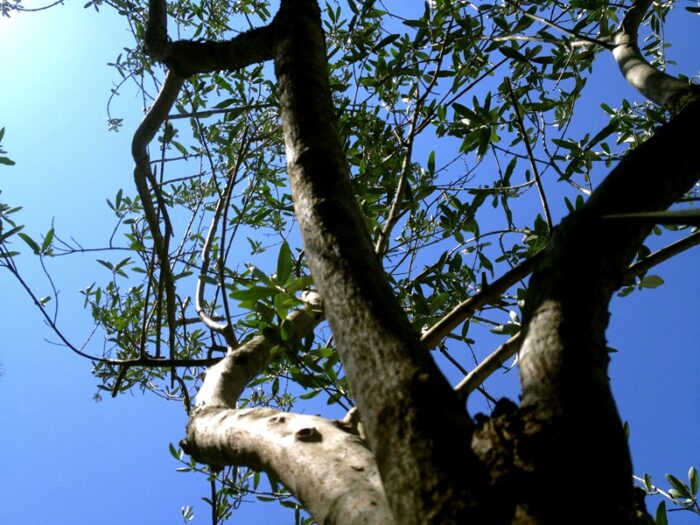
There’s no moment when it starts. No sudden shift, no obvious marker. One morning you just realise it: the light has changed. The days have stretched. A window is open that would’ve stayed closed in February. You walk out without a scarf and don’t go back for it. Spring on the Costa Brava doesn’t arrive so much as creep in.
Maybe you’re near the coast — walking the headland above Tamariu or the back paths behind Palamós — and you hear something you hadn’t noticed for a while: birdsong, layered and busy. Or you drive inland through the Empordà, past fields still wet from winter, and notice the green has deepened, the trees are no longer still. The rhythm changes first. Then the people follow.
Gardens show signs of care again. Terraces are swept. Shutters are fixed. Cars that haven’t moved since autumn suddenly disappear. You start seeing cafés with tables outside, not just for the sun-trap but because the temperature holds long enough to sit. There are more people on foot. More greetings in the street. The coastline begins to open up again — not all at once, but piece by piece.
This is how spring starts here. Not with blossom or birdsong or buds on trees — though those things come — but with small shifts in pace and temperature, in wind and light. It’s not a return to summer. It’s the start of something else entirely: slower, softer, and still unsure of itself.
A season of opposites
Spring on the Costa Brava doesn’t settle into anything. It flickers between seasons, back and forth, sometimes in the same afternoon. You leave the house in a jumper and wish you’d brought a coat. Or you bring a coat and end up carrying it. There’s no reliable rule. The only thing you can count on is change.
March still feels like winter. The wind can be sharp, especially near the coast, and the sun — when it comes — sits low and quick. Inland, the mornings are cold and damp. But then you’ll have a run of clear, still days when the temperature edges past 20ºC and you start to believe in summer again. It’s a trick. April will remind you. A rainstorm will wash through in twenty minutes, or a sea mist will drift in without warning and drop the temperature by five degrees. The weather doesn’t care about your plans.
The contrast extends beyond the forecast. The land is green, but the towns are quiet. Wildflowers appear along cliff paths that no one’s walking. Almond trees bloom near empty farmhouses. Beaches are empty, but bright. Cafés serve cold drinks, but only indoors. It’s not the full season yet — it’s the space between things.
The best days are the ones with no expectations. When you take a back road and end up somewhere new. When you sit on a wall with your face in the sun, knowing it might not last. Spring here doesn’t ask you to do anything — just to notice it, while it’s happening.
What changes — and what doesn’t
By early spring, change is everywhere — but it doesn’t move at the same pace. Some towns start waking up before others. In a place like Palamós, you might see menus reappearing outside restaurants, or notice the smell of cleaning products as shop shutters are pulled up after months closed. In Calella de Palafrugell, the change is quieter. People arrive at second homes with bags of food and no urgency. They sweep, repair, re-stock. There’s no rush.
The beaches are still mostly empty. You’ll see walkers, runners, a few people sitting on benches facing the sea. Every now and then, someone dips a toe in — or dives straight in, laughing and loud, just to prove they still can. The water is still cold, but by May, it starts to tempt. Lifeguard huts stay empty, but towels begin to appear.
Some restaurants reopen just for weekends, especially if Easter falls early. Others hold off until May. Supermarkets extend their hours. Market stalls grow more confident. Seasonal produce appears — not in abundance, but in signs of what’s coming. Strawberries from the south. Early greens. Wild asparagus on roadside signs, handwritten and slightly damp.
But it’s not all forward motion. There are still days that feel like February. There are still boarded-up windows in seaside towns. There are still whole streets where nothing has moved since Christmas. And inland, there are pockets where winter doesn’t quite let go — where the fields are muddy, the wind bitter, and the fire still needed at night.
Spring doesn’t flip a switch. It pulls the place forward slowly, like someone drawing open a curtain one ring at a time. You see it happening — but you’re never quite sure when it started.
What to eat in spring
The food begins to lighten before the weather does. By March, the heavy stews and roasted meats of winter start to give way to greener, sharper flavours — not a full shift, but a clear change in direction. You’ll still see escudella on the menu, especially inland, but it’s now sitting beside dishes built around what’s coming out of the ground.
At the markets, the first broad beans appear, followed closely by peas, baby artichokes, and bundles of asparagus — both cultivated and wild. These are the building blocks of spring cooking here: soft, green and often served simply. Calçots may still be around in early spring, stretching the season into March, depending on the weather. You’ll also start to see onions, lettuce, and young garlic, alongside the usual year-round staples.
Some restaurants lean into it. You might find a creamy pea soup, a grilled artichoke with olive oil and salt, or a rice dish with seasonal vegetables and a touch of seafood. Nothing too heavy. Lamb appears more often now, as does grilled fish — sardines, mullet, or dorada, often served plainly. This isn’t showy food. It’s seasonal, practical, and tastes better because of it.
Inland, some rural restaurants start offering set lunch menus again — especially in places like La Bisbal d’Empordà, Torroella, and Monells. You’ll see more rosats on the tables, and crisp whites start to return, often paired with fish or salad. Locals sit outside when they can, jackets on the backs of chairs, a bottle of water sweating in the sun.
This is also the start of picnic season. You’ll see families parked up near pine groves or in vineyard laybys, unpacking bread, olives, and last night’s leftovers in Tupperware. The grass is still wet. The food tastes better outdoors. And no one’s in a hurry.
Walking, cycling, and the return to the outdoors
Spring is when the Costa Brava starts to open up again — not through shops or attractions, but through its paths, hills, and quiet roads. The weather isn’t yet hot, the light stretches into evening, and everything seems to breathe a little easier. It’s not beach weather, not really, but it’s ideal for being outside.
The Cami de Ronda, so often dusty and crowded in high season, feels almost like a secret in March and April. The cliffs are green again, wildflowers pop up along the edges, and the air smells of pine and damp stone. Some stretches are still slippery from winter rain, but that’s part of it — the season still has rough edges. Walk early in the morning and you might go an hour without seeing anyone. Just the sea to your right, the hills to your left, and the sound of your own steps.
Inland, the Les Gavarres and the Massís de Cadiretes are at their best — cool enough to climb, dry enough to enjoy, and quiet enough to feel like you’ve found something. There are still muddy tracks in March, but by April, the routes are dry and shaded. Almond trees bloom. Birds return. Small farms hum with activity.
This is also when the cyclists arrive — especially the training groups. You’ll see them in clusters on the rural roads, often in tight packs and bright Lycra, following familiar loops between the coast and the hills. It’s a boost for local tourism, but it’s not always easy for other road users. Drivers need to stay alert on winding roads, and it’s not unusual to come around a bend and find a dozen cyclists riding two abreast along with a slow moving support vehicle. It’s part of the season, like it or not.
But for walkers, photographers, casual cyclists and anyone craving movement, spring is near perfect. The land is awake but not overwhelmed. You can walk without heat, cycle without sweating, and stop wherever you like without worrying about the crowds.
A pause before the season begins
There’s a stretch of spring — somewhere between mid-April and the start of June — when the Costa Brava hangs in balance. The air is warmer, the light is longer, but the season hasn’t fully tipped into summer yet. It’s the last quiet moment before everything accelerates.
Some weeks are almost too still. You walk through a village square in the middle of the day and hear nothing but wind and a door shutting two streets over. The cafés are open, but there’s no queue. Beaches have footprints but no towels. Coastal towns like Llafranc, Tamariu, or Sa Riera look freshly painted and oddly unoccupied — as if waiting for something to start.
Easter often marks a subtle shift. If the weather is good, people return — mostly weekenders, second-home owners, a few early tourists. Restaurants expand their hours, shops restock, and the seasonal rentals get swept out. By May, there are a few more cars on the road, a little more movement. But it’s not summer yet. You can still find a table without booking. You can still park at the beach. You still see more locals than visitors.
This short window — after the cold and before the crowds — might be the most generous season of all. The weather behaves. The walking is good. The food is fresh. The sea is still quiet. And best of all, no one is in a rush.
It doesn’t last. The first heatwave, the first traffic jam, the first fully booked restaurant will come soon enough. But for a few weeks, the balance holds. And if you’re here for it, you’ll probably wish it could stay that way.
The beauty of in-between
Spring doesn’t try to compete with summer. It doesn’t bring the crowds of August, the stillness of January, or the stormy drama of October. What it offers instead is a season that is neither one thing nor the other — a season of in-between.
You see it in the weather: warm one day, cold the next, never quite predictable. You see it in the landscape: vines not yet full, wildflowers already fading, the sea too cold to swim but too beautiful to ignore. You see it in the towns: shutters going up, terraces opening, menus trimmed but ready. The Costa Brava feels like it’s stretching, shaking itself awake, preparing for the work ahead.
There’s a quiet honesty to it. Life is present but not performed. Cafés serve their regulars, not visitors. Market stalls fill with greens because that’s what’s growing, not because it looks good on a brochure. The coast feels lived-in, not staged. You can walk through it without feeling like you’ve arrived too early or too late.
And that’s the beauty of spring here. It’s not a headline season, but it’s real. It gives you time and space, light without heat, movement without pressure. It asks for nothing more than that you notice it. And if you do, you’ll see the Costa Brava as it is — not yet ready for summer, not holding onto winter, but perfectly balanced between the two.