HOTELS | HOLIDAY RENTALS | CAMPSITES
If you want to really get away from it all then Colera might be just right for you. The Costa Brava doesn’t come any quieter than this.
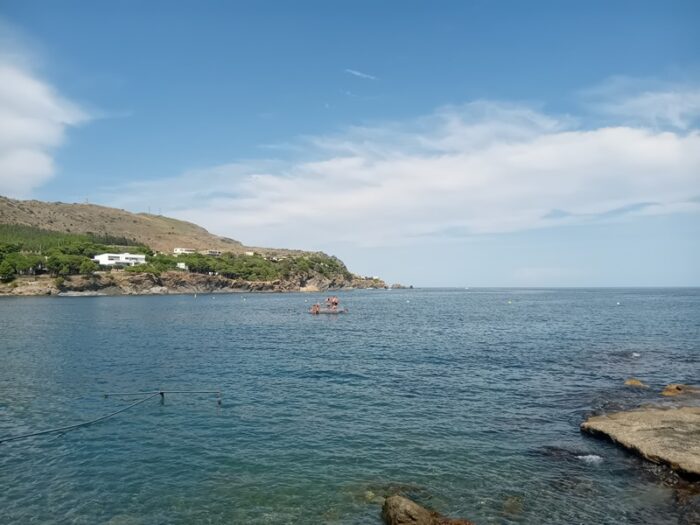
A tranquil day on one of Colera’s beaches in August. Photo by David Leigh
With a wintertime population of fewer than 600, Colera hardly gets packed in summer despite some decent pebble beaches and the mountainous terrain. The town has a small marina, just a handful of hotels, tourist apartments and a camp site. Access is via road or train.
What immediately stands out about Colera is how quiet the beaches are, even during the weekend at the height of summer. While most Costa Brava beaches are packed by this time of year, Colera offers an almost unbelievable level of peace and quiet. Platja d’en Goixa is a quiet, stony beach just a short walk from the railway station with clear water perfect for swimming and snorkelling. It’s the kind of place where you can spend all day without feeling rushed or crowded.
Colera is an odd little town in some ways, with the railway viaduct high above giving it a unique character. While restaurants near the beach can get busy, you’ll find quieter spots in the main square for lunch, but overall you won’t believe how quiet the town is.
Accommodation options in Colera are fairly limited. While there is a selection of rental properties available, hotel accommodation is scarce and there is a single campsite. Colera really is a world away from the tourist resorts further south and if you’re looking for a luxury hotel then Colera isn’t the place for you at all. When it comes to dining you’ll find restaurants are fairly relaxed, serving Catalan dishes with a strong emphasis on seafood.
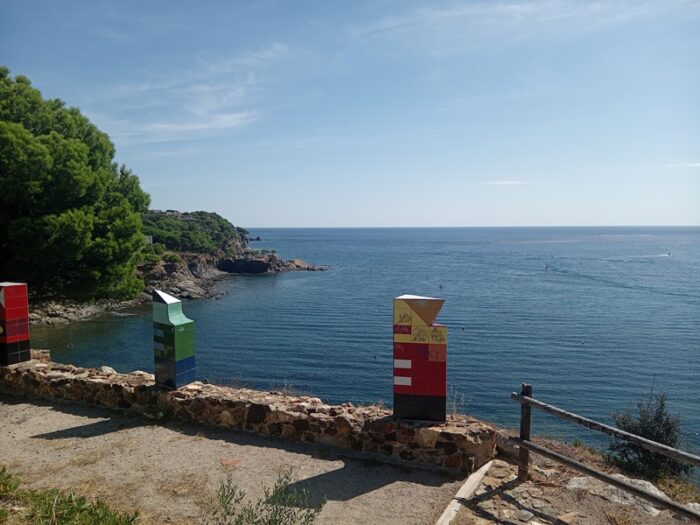
A view out to sea from Art Parc in Colera. Photo by David Leigh
For more energetic holidaymakers Colera has plenty to offer. Visitors can explore the beautiful natural surroundings on foot or biking. The town also home to several cultural events throughout the year, including an annual small boat regatta and the Festa Major at the end of September, a lively festival celebrating the town’s patron saint.
Water sports enthusiasts can enjoy activities such as snorkelling, scuba diving, and kayaking in the town’s clear waters.
A brief history
Colera’s origins stretch back over a millennium, with its roots tied to the establishment of the Sant Quirze de Colera Monastery in the 10th century. Situated approximately eight kilometres inland, this Benedictine monastery played a pivotal role in shaping the region’s identity. Though its location may seem remote by today’s standards, it was strategically placed to take advantage of fertile lands and to serve as a spiritual centre during a time when the Costa Brava was sparsely populated.
The town’s name, Colera, is thought to derive from the Latin word collis, meaning “hill,” a nod to the rolling terrain that surrounds it. This connection to the land is echoed in the layout of the village and its historical structures, many of which blend seamlessly into the rugged coastal environment.
Colera, as we know it today, began to take shape in 1770 when three brothers were granted permission to establish a village, originally named Sant Miguel de Colera. Legend has it that the authorisation came with a detailed town plan that included provisions for a church, a town hall, and even cannons for defence against potential invaders. However, no historical documentation has ever been found to confirm the existence of this plan, leaving it as one of the charming mysteries of Colera’s past.
By the late 19th century, Colera was under the jurisdiction of nearby Portbou, a situation that local residents found stifling. In 1929, tensions reached a boiling point, leading to riots as Colera’s inhabitants demanded greater autonomy. Their persistence paid off in 1934 when Colera regained its independence, marking a significant moment in its history and cementing its identity as a self-reliant community. In more recent history, the town’s port was modernised in 2014, providing mooring for up to 150 boats. While the facilities remain small in scale, they are well-equipped.
Further afield, the Sant Miquel de Colera Hermitage and the Sant Quirze de Colera Monastery are must-visit historical sites for those eager to delve deeper into the region’s medieval roots. These structures provide a tangible connection to the past, showcasing the architectural and spiritual influences that shaped the Costa Brava.
Beaches
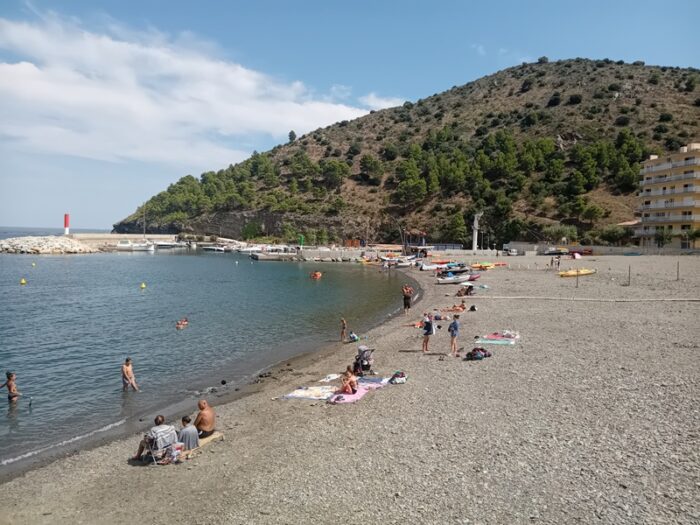
Platja de les portes is Colera’s main beach. Photo by David Leigh
The seafront at Colera is surprisingly small, even for such tiny village. It extends back from the port area along the course of the river that flows into the sea there. The main beach is right next to the port, but there are two others nearby. Beaches near Colera are all pebble.
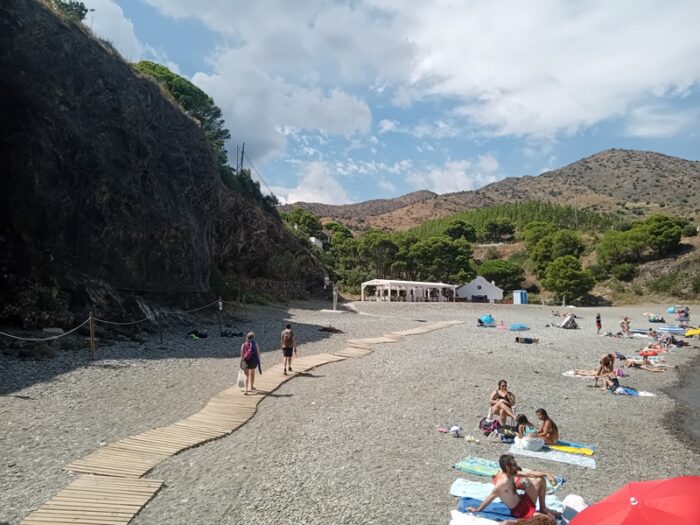
The beach bar on platja dels morts. Photo by David Leigh
First is Platja dels Morts – beach of the dead – so-called because it was where thedead from Portbou were brought ashore in the old days prior to the town having its own cemetery. Further on is Platja d’en Goixa.
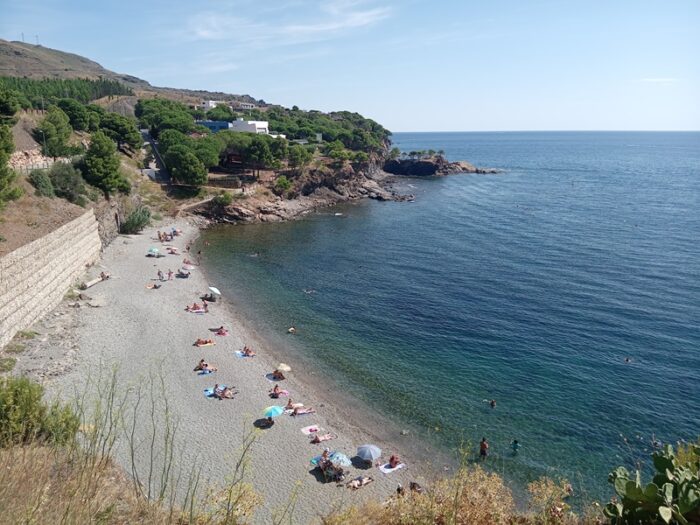
Looking down on platja d’en Goixa. Photo by David Leigh
Another notable beach is Platja de Garbet, although it’s a 40 minute walk to get there from Colera. It’s a beautiful, unspoiled beach that is located in a secluded bay south of the town. The beach is made up of pebbles and rocks rather than sand, but the crystal-clear waters make it an excellent spot for swimming and snorkelling. The beach is relatively small and is generally not very busy, making it an excellent choice for those seeking a peaceful and relaxing day at the beach and there is a beach bar at one end where you can get a cool drink or a bite to eat.
You might also like the beaches at Cala Rovellada, north of the town, and Platja del Borró, which is near Garbet. Rovellada beach is a small, quiet pebble beach in a cove within a housing estate. The beach is perfect for snorkelling and swimming and tends not to be too busy.
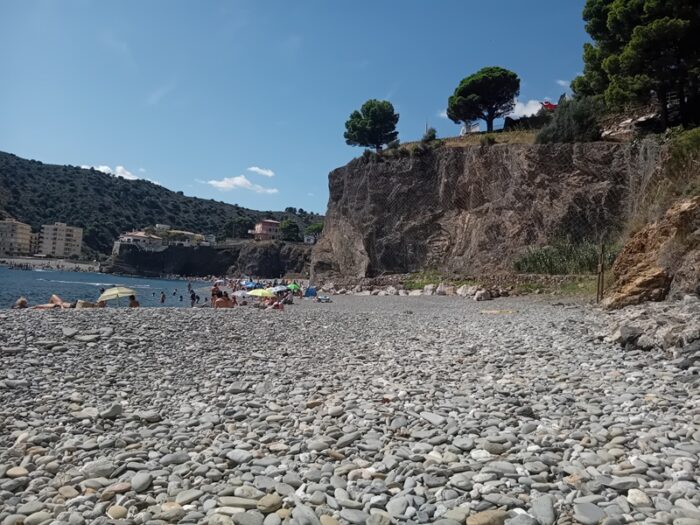
Even in August Colera’s pebble beaches are quiet. Photo by David Leigh
Overall, the beaches in Colera are beautiful and offer visitors a chance to relax and enjoy the natural beauty of the Costa Brava. These beaches are an excellent choice for those seeking a peaceful and enjoyable day at the beach.
Where to stay
When it comes to accommodation in Colera your options are quite limited, but that’s the price you pay for such a quiet town. The bulk of Colera’s holiday accommodation is rental apartments and villas with just a handful of hotels and hostals – guest houses – serving the town.
Hostal Totsompops is on the edge of town and has four pet friendly suites and a great restaurant. The 2-star Hotel la Gambina is right on the promenade with views of the bay and it has a restaurant. And Hostal Mont-Mercè is located on the sea front and has a tapas bar for drinks and snacks. These are all fairly no-frills so if you’re looking for luxury accommodation Colera probably isn’t for you but they are clean and offer what many people are looking for when it comes to holiday accommodation.
For those seeking more flexibility and privacy, there are also numerous apartments and rental villas available in Colera. These range from small studio apartments with kitchenette to properties include a fully-equipped kitchen, private swimming pool, and stunning views of the surrounding area.
Camping is another option in Colera, although there is just one campsite serving the area. Camping Sant Miquel offers excellent facilities, including swimming pools, restaurants, and children’s play areas.
Eating in and eating out
Colera’s relaxed dining options are an extension of its tranquil charm. While it isn’t a traditional fishing village, its proximity to the sea ensures fresh seafood is a staple on most menus. Totsompops, known for its focus on traditional Catalan dishes, is highly rated for both its seafood and meat specialties. Meanwhile, La Gambina and El Jovent also come recommended by visitors who appreciate their welcoming service and flavoursome dishes.
Bar la Plaça is a welcoming spot tucked away in Colera’s main square, offering a quieter dining option compared to the busy beachfront restaurants. It’s a great place for a leisurely lunch or an afternoon drink, with simple, hearty Catalan dishes on the menu and a relaxed atmosphere. Whether you’re after a quick bite or a chance to soak up the village vibe under the shade of the square’s impressive plane tree, Bar la Plaça delivers unfussy food and friendly service in a setting that feels refreshingly unhurried.
For food enthusiasts willing to venture a bit further, the nearby town of Llançà boasts Miramar, a 2-star Michelin restaurant, while El Celler de Can Roca, a globally acclaimed 3-star establishment, is just a short drive away in Girona.
For self-caterers, Colera has a small supermarket and a weekly outdoor market on Mondays offering fresh produce and essentials. Larger towns like Llançà and Figueres provide broader shopping opportunities for those staying in rental properties.
What to see and do
If spending all day on the beach or exploring the coves isn’t your thing then there is still a good selection of activites to participate in and things to explore both in and around Colera. There are the usual watersports options such as kayaking and snorkelling and the village has a dive centre which offers boat trips to dive sites on the Cap de Creus as well as off the French coast. The clear waters around here are perfect for exploring the underwater world and discovering the local marine life.
In the town itself there is the parish church of Sant Miquel de Colera and a collection of sculptures by Joan Padern on the seafront. Plaça Pi i Margall is dominated by a spectacular plane tree that apparently dates from 1898. And if you explore the hill overlooking the port you’ll find two cannons dating from 1789.
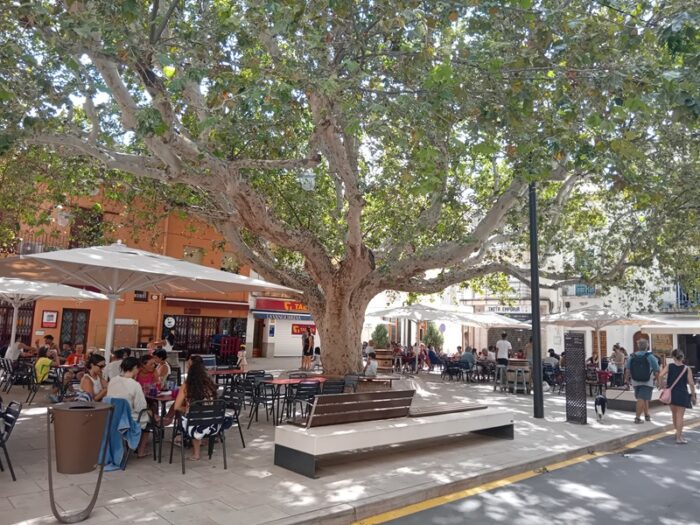
Colera’s main square is dominated by a large plane tree dating from 1898. Photo by David Leigh
Get out of the village and you can explore a number of historical sites. At Molinars you’ll find the ruins of a fortified farmhouse and a watermill dating from the 17th century. It’s 4 kilometres from Colera and accessible on foot. You can drive but you’ll need an off-roader to reach it. Equally remote is Sant Miquel de Colera hermitage, which dates from the 12th century. You can also visit the monastery of Sant Quirze de Colera, a 40 minute drive.
Colera is close to Cap de Creus where nature lovers will also enjoy the many hiking trails and within the Natural Park. It offers stunning views of the coastline and rugged terrain that is perfect for hiking and exploring. You might like to visit the Romanesque Monastery of Sant Pere de Rodes, which dates back to the 9th century. It towers above Port de la Selva and Llançà and offers stunning views of the surrounding area. Cap de Creus is also where you find the picturesque town of Cadaqués with its whitewashed houses and narrow cobbled streets. Be sure to book a tour of Salvador Dalí’s house in Portlligat while visiting.
And if you’re interested in food then Colera offers a small range of local restaurants and cafes where visitors can sample traditional Catalan cuisine, including fresh seafood and local wines.
Overall, Colera offers a range of activities and attractions that cater to different interests and preferences, making it the perfect destination for a diverse range of holidaymakers.
How to get to Colera
If you’re flying into Barcelona or Girona then consider the train. Colera is the penultimate stop on the train line up from Barcelona and takes up to three hours from the Catalan capital. By road Colera is just over two hours from Barcelona and an hour and a quarter from Girona. The advantage there is that you can get out of town to explore the countryside or visit nearby towns such as Figueres.
If you’re arriving by road from France you can take the D914 coastal road from Cerbère across the border and then follow the winding N-260 through Portbou and on to Colera. If you’re on the motorway then follow the AP-7 southbound from the border until you reach junction 3 at Figueres. From here follow the N-II until Vilabertran, where you should get on the N-260, continuing past Llançà until you reach Colera.
From Barcelona take the AP-7 motorway north towards France and exit at junction 4 before following the signs to Colera. This will take you on the N-II and onto the N-260.
For those flying into Barcelona or Girona airports, public transport options are available. The RENFE train runs regularly from Barcelona to Colera, with a journey time of approximately two hours. From Girona, take the bus or train to Figueres and then change for a train to Colera.
HOTELS | HOLIDAY RENTALS | CAMPSITES