After the summer, the Costa Brava settles into a quieter rhythm of still light, soft rain and small routines.
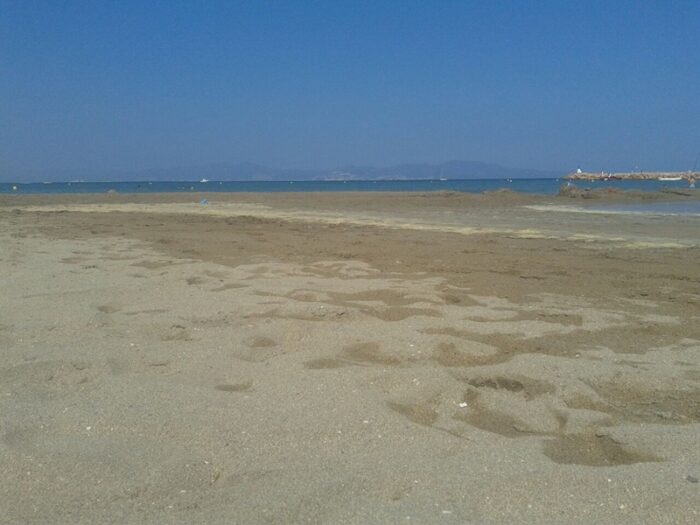
You can feel it before you see it. That slight drop in temperature the moment the sun dips, the silence in the early mornings, the way the shadows stretch a little longer each afternoon. Autumn on the Costa Brava doesn’t announce itself with fireworks. It arrives slowly, without wanting to make a fuss.
While walking the dog I often watch the sun sink behind Montseny, softening the horizon into a wash of orange and grey. On the coast the mood is changing too. The last of the summer visitors are finishing their final menu del día, the beaches are quieter by the hour, and shop windows begin to change. Many restaurants close up for the season. You can suddenly find a place to park. There’s space to notice things.
Autumn light is different here. The brightness of July fades into something warmer, lower, and more forgiving. Whitewashed houses take on a deeper hue in the late afternoon; stone villages inland seem to glow for a few moments before night falls. It’s not the blazing gold of a postcard autumn but there’s a shift all the same. The landscape feels more textured. The pace slows.
In the coastal resorts, the change arrives not with falling leaves but with quieter streets, fewer shop awnings, and a noticeable stillness in the early morning. The tramuntana might kick up now and then, sharpening the light and cooling the air. It’s not cold yet — sweaters come out in the evenings, but woodsmoke won’t arrive until much later in the season. The change is more social than seasonal at first. Life contracts a little. Locals reclaim their routines. Visitors disappear.
September holds on to summer — for a week or two, sometimes longer — but by the time October settles in, autumn has made itself known. It doesn’t shout. But if you live here, you know it’s arrived.
What the weather’s really like
It’s the first question people ask when they’re thinking about coming in the shoulder season: what’s the weather like in autumn? The answer depends on when — and what you’re hoping for. September often starts with a final taste of summer. Highs can still reach 26°C in the first week or two, and if the skies stay clear, you might just manage a few hours on the beach. But by mid-month, that begins to feel optimistic. The sea cools quickly, the days shorten, and the heat loses its grip.
The transition isn’t smooth. One morning it’s warm enough for breakfast outdoors; the next, the tramuntana has rolled in and you’re reaching for a jumper. You start dressing in layers — T-shirt at lunch, jumper in the evening, jacket if you’re heading out early. September’s average temperature is around 20°C, but the drop towards October is noticeable.
October is when autumn takes over — and it’s often the wettest month of the year. Rain doesn’t fall gently here. It comes fast, heavy and sometimes dramatic. A blue sky in the morning means nothing by mid-afternoon. Village streets turn slick, forest paths muddy, and coastal roads need extra attention. November is nearly as wet, and the sudden storms can catch people off guard. Inland, you sometimes get short bursts of flooding in fields and gullies. Water runs in the streets. It passes, but it’s part of the rhythm of the season.
Temperatures fall steadily: average highs drop to 22°C in October, and by November they’re closer to 16°C. There are still bright days — clean skies, clear air, the occasional sense of spring in the sun — but you begin to see proper coats, scarves, and boots in the cafés. Woodsmoke arrives late in the month, mostly inland or in older homes.
Autumn on the Costa Brava isn’t consistent — and that’s part of its character. It’s a season of shifting light, unexpected beauty, and the occasional downpour. You don’t come for guaranteed sunshine. You come for something quieter, more local — and more honest.
Autumn colours — just not the ones you think
Mention “autumn colours” and most people picture forests turning red and gold, leaves crunching underfoot, maybe even a pumpkin or two. That version of autumn doesn’t belong to the Costa Brava — at least not on the coast. Here, the palette shifts more subtly. It’s less about foliage and more about light, land, and texture.
Pine forests stay green. Olive trees remain silver-green and still. The colour change happens not in the leaves but in the atmosphere. Light reflects differently on the sea — steelier in the mornings, golden by late afternoon. The horizon sharpens. Clouds cast longer shadows on the water. The difference is quiet but visible, especially if you know the summer version well.
Inland, though, the changes are more pronounced. Vineyards turn rusty-red and yellow in the Empordà, especially in the second half of October. The leaves of fig trees go golden and drop quickly, and the fields begin to brown. You see the structure of the land more clearly — the lines of old stone walls, the patchwork of small fields, the edges of the cork oak forests just beginning to turn. From the hills, looking down towards the coast, there’s a kind of softness that doesn’t appear in any other season.
Autumn also makes the built environment stand out. Whitewashed façades in old fishing villages reflect a warmer light. Narrow streets in places like Pals or Peratallada, usually thick with foot traffic, feel washed clean. Even the signage fades into the background. You notice the shapes of things more: shutters left half-closed, dry vines curling round balconies, crumbling mortar that somehow looks beautiful in this light.
It’s not a season of showy change, but it rewards attention. The colours are quieter, the contrasts stronger. You don’t get the reds and oranges of more northern climates — but what you do get is space, clarity, and a kind of visual calm that’s hard to find in summer.
The autumn table — food, wine and seasonal ingredients
The summer menus disappear. One by one, restaurants in the coastal towns start closing for the season, especially the ones that cater mostly to visitors. What’s left is more interesting. You start to see dishes that make sense in cooler weather: slow-cooked meats, grilled local mushrooms, stews that aren’t trying to be light. Autumn cooking on the Costa Brava is earthy, unfussy, and tied to what’s growing nearby — or what’s being foraged in the woods.
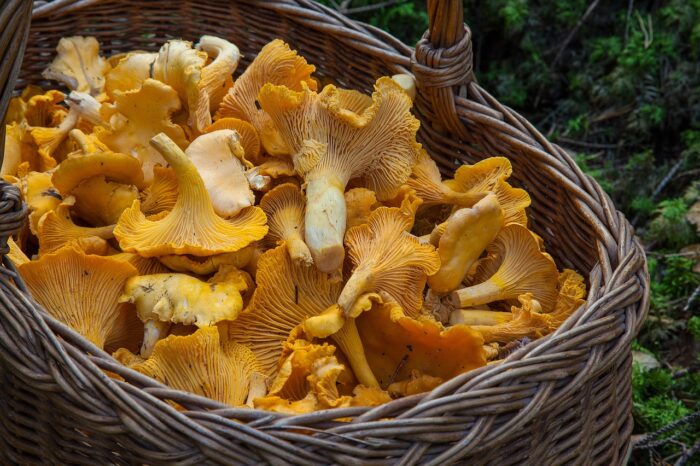
A basket of mushrooms. Photo by Barbroforsberg
October and November are mushroom months. If the rains have come on time, you’ll see baskets of rovellons, camagrocs, and trompetes de la mort at local markets. The latter appear later in the season, usually in November, and their dark, wrinkled appearance hides a rich, almost smoky flavour that works beautifully in rice dishes and creamy sauces. Figs, walnuts, sweet potatoes and quinces fill out the stalls. In restaurants that stay open — especially inland or in year-round towns like Palafrugell and Torroella de Montgrí — the specials board will lean into what’s just been picked or hunted. You might see wild boar, duck with pears, or ceps grilled with garlic and parsley. Richer, heavier flavours replace the light seafood and cold salads of August.
Anchovies are a year-round staple in l’Escala, but there’s something about eating them now, in a quieter setting, that feels more local. Less of a show, more of a snack. They might come with pa amb tomàquet, or sit on top of a warm escalivada. Inland, olive oil pressing begins late in the season, and some places let you try the fresh green oil — sharp, peppery, and unforgettable.
Chestnuts start appearing in the second half of October, roasted and wrapped in newspaper, often sold from makeshift stalls during la Castanyada, the Catalan version of All Saints’ Day. It’s a quieter, more reflective occasion than Halloween, celebrated with panellets (sweet marzipan cakes), roasted chestnuts, and sweet moscatell wine. It’s one of those moments that reminds you this isn’t the Costa Brava of summer.
This is when food stops being a performance and becomes a comfort again. When the seasonal calendar takes over from the menu. You eat what’s available. And that, more than anything, tells you autumn has arrived.
Walking, not sunbathing — how you spend your days
By the middle of September, beach days start to feel like a bonus rather than a given. The towels are packed away, the inflatable paddleboards deflated and stored. You might still get a warm, still afternoon, but autumn on the Costa Brava isn’t about lying flat on a lounger — it’s about being upright, moving, noticing.
Walking becomes the main activity, not the fallback. Without the heat, the coastal paths open up again — not just physically, but in terms of attention. The Cami de Ronda, which in summer can feel like a sun-scorched corridor between packed beaches, becomes peaceful. In some places, you might not pass another person for half an hour. From the higher stretches, the views are sharper now: the sea darker, the coves below almost empty, the sky more layered.
There’s something quietly rewarding about walking through pine forest in late October, when the floor is soft with needles and the only sound is the occasional snap of a twig underfoot. Inland, there are short hikes to crumbling towers, old hermitages and lookout points. You find local farmers selling pumpkins and fresh eggs by the side of the road. There’s less to “do”, and that’s the point.
In the fishing villages the seafront slows, the old town becomes more reflective, and without the buzz of summer visitors, you begin to notice the small details again — the rhythm of shop shutters, a line of washing, the smell of coffee from a bar that never closed in the first place. It’s a good time for small routines: buying bread, reading on a bench, watching the sea. The place becomes more about living than visiting.
For artists and photographers, autumn is the best season. The light is soft and forgiving; the sky more interesting. Colours pop after rain, especially inland where the vines are turning and the earth is dark and wet. Even in cloudy weather, there’s something appealing — the kind of grey that adds depth rather than dullness. Fewer people, more atmosphere.
Autumn asks for a slower pace. And if you’re paying attention, you start to notice the coast differently — not as a destination, but as a place with its own quiet routines.
The best places to stay in autumn — and why
Autumn changes what you want from a place to stay. In summer, it’s all about proximity to the beach, terraces with sea views, air conditioning. But once the heat fades and the sea loses its appeal, comfort becomes more important than convenience. You’re not looking for a sun-trap — you’re looking for warmth, quiet, and a space that makes sense in cooler weather.
One of the surprises for off-season visitors is that many tourist properties are simply not available in autumn. They’re built for August, not November and often lack adequate heating and decent insulation. That’s why autumn is often better suited to places designed for year-round use: guesthouses, rural hotels, old farmhouses, or homes lived in full-time. The Empordà interior has some excellent options — stone masias with thick walls and wood-burning stoves, or small boutique hotels in villages like Sant Feliu de Boada, Cruïlles, or Madremanya. They’re quiet, but not lifeless. You might be the only guest, or one of just a few — and that’s part of the appeal.
On the coast, Cadaqués, Llafranc, and parts of Palamós retain a sense of life through the autumn months, with cafés still open and local shops trading as usual. Inland, towns like La Bisbal d’Empordà or Figueres offer more practicality — markets, good restaurants, and connections to the rest of the region. These are places that don’t shut down.
Wherever you stay, look for warmth. Not just heating, but also spaces made to be lived in — bookshelves, textiles, proper crockery. You’re more likely to be inside, even if just for the evenings. What matters now is not whether there’s a pool, but whether there’s a good chair by the window, and a kettle that works.
A different kind of Costa Brava
By November, most visitors are long gone. The beaches are quiet, the sun sets early, and whole stretches of the coastline feel almost deserted. It’s tempting to describe this as “off season,” but that doesn’t quite capture it. This isn’t the Costa Brava switched off — it’s just the Costa Brava without an audience.
What remains is something more local, more real. Markets still open. Bakers still bake. Fishermen still bring in their catch. It’s not dramatic — just daily life. For those who live here year-round, autumn isn’t an epilogue to summer. It’s a season in its own right, with its own weather, pace, and pleasures.
You start to notice things. Not just the absence of tourists, but the return of small routines. Children walking to school. Elderly neighbours playing cards outside bars in the morning sun. A man chopping firewood in a courtyard you never noticed before. The loudest sound might be the wind through pine trees, or a tractor on a road that hasn’t seen a rental car in weeks.
And when the weather does turn — when the sky darkens, and the rain falls in sheets — there’s something quietly satisfying about being indoors. A pot of something simmering, windows fogging up, the sound of the storm muffled by thick walls. It doesn’t make the postcards, but it’s part of the truth of the place.
This isn’t the Costa Brava of bucket lists and Instagram itineraries. It’s a different kind of beauty: quieter, slower, more grounded. And for many people who come back every year — or who never left — this is their favourite season. Not because it’s perfect, but because it doesn’t try to be.