Catalonia for art lovers: key museums and galleries in the Costa Brava
April 8, 2025Whether you love surrealism, classical art, or modern sculpture, these key museums and galleries in Costa Brava offer something for every art lover.
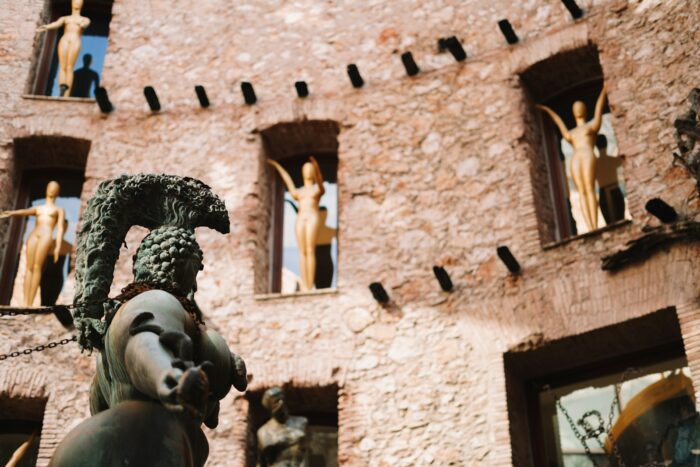
The Salvador Dalí Theatre-Museum in Figueres. Photo by Lala Azizli
The Costa Brava has long been a source of inspiration for artists, from medieval painters to avant-garde surrealists. Its dramatic coastline, charming villages, and rich cultural heritage have drawn creative minds for centuries. Today, the region is home to an impressive collection of museums and galleries, offering art lovers a chance to explore everything from Romanesque religious paintings to contemporary installations.
Whether you’re fascinated by Salvador Dalí’s surrealist world, interested in Catalonia’s artistic traditions, or looking for emerging talent, the Costa Brava has something for every art enthusiast. This guide explores the must-visit museums and galleries in the region, highlighting key collections, cultural influences, and the artistic legacy of this stunning Mediterranean coastline.
The Dalí Triangle: Surrealism in the Costa Brava
Few artists are as closely linked to the Costa Brava as Salvador Dalí. Born in Figueres, the surrealist painter spent much of his life in the region, drawing inspiration from its landscapes and creating some of his most famous works here. Today, Dalí’s legacy is preserved in three key locations, known collectively as the Dalí Triangle.
Teatre-Museu Dalí (Figueres): a surrealist masterpiece
The Teatre-Museu Dalí in Figueres is one of the most distinctive art museums in the world. Designed by Dalí himself, the museum is as much a surrealist experience as the works it houses. The building, crowned with giant eggs and studded with golden loaves of bread, was once a theatre, which Dalí transformed into his personal artistic universe. Inside, visitors can explore paintings, sculptures, optical illusions, and even Dalí’s own crypt.
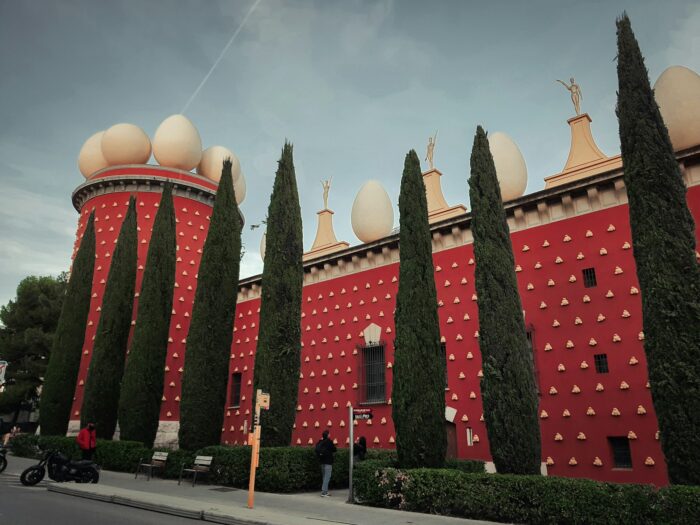
The Dalí Theatre-Museum in Figueres. Photo by flickch
Highlights:
- Iconic works like Gala Contemplating the Mediterranean Sea and Mae West Room.
- A collection of jewellery designed by Dalí.
- The immersive and theatrical experience of the museum itself.
Casa-Museu Salvador Dalí (Portlligat): Dalí’s creative retreat
Dalí’s former home and studio in Portlligat, a small fishing village near Cadaqués, offers a more intimate look at his life. The house, a series of interconnected fishermen’s huts, is filled with Dalí’s personal belongings, eccentric decorations, and the objects that inspired him. The peaceful surroundings, overlooking the sea, were key to his artistic process.
Highlights:
- Dalí’s workshop, left as it was when he worked there.
- The garden and pool, designed with Dalí’s signature surrealist touches.
- A glimpse into Dalí’s everyday life and creative process.
Castell Gala Dalí (Púbol): a surrealist castle
Dalí bought and restored this medieval castle in Púbol as a gift for his wife and muse, Gala. Unlike the flamboyant museum in Figueres, Púbol Castle has a more mysterious, secluded atmosphere. It was Gala’s private retreat, and Dalí could only visit with her permission. The castle features surrealist decor, Gala’s collection of dresses, and Dalí’s paintings and sculptures dedicated to her.
Highlights:
- The contrast between medieval architecture and Dalí’s surrealist design.
- Gala’s tomb, where she is buried inside the castle.
- Unique furniture and objects designed by Dalí.
Visiting all three sites gives a deeper understanding of Dalí’s art, life, and the landscapes that shaped his imagination. For art lovers, the Dalí Triangle is an essential experience in the Costa Brava.
Foundations of Catalan Art: from medieval to modern
Catalan art has evolved over centuries, influenced by religious traditions, political shifts, and connections with Mediterranean cultures. The museums in this section showcase everything from medieval altarpieces to modernist movements, providing a deep understanding of the region’s artistic identity.
Museu d’Art de Girona: a journey through Catalan art
Located in a former episcopal palace, the Museu d’Art de Girona houses one of the most significant collections of Catalan art, spanning from the Romanesque period to the 20th century. It provides a fascinating look at how art in the region has developed over the centuries.
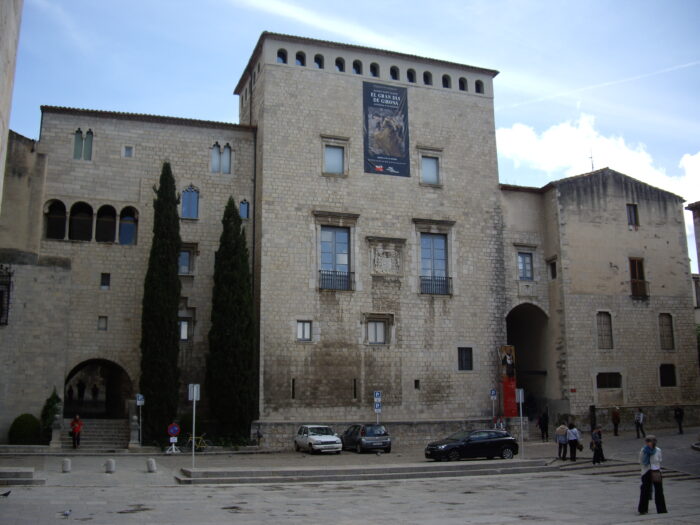
Girona’s art museum. Photo by Eboix licensed under CC BY-SA 3.0
Highlights:
- Romanesque and Gothic religious paintings, including altarpieces from local churches.
- 19th- and 20th-century Catalan artists, including works influenced by Modernisme and Noucentisme.
- The museum’s setting in a historic palace adds to the experience.
Museu de la Mediterrània (Torroella de Montgrí): art, culture, and identity
More than just an art museum, the Museu de la Mediterrània explores the connections between the Costa Brava and Mediterranean culture through art, music, and history. The museum frequently hosts temporary exhibitions featuring local and regional artists.
Highlights:
- A focus on the relationship between landscape and artistic expression.
- Multimedia exhibitions combining art, music, and oral history.
- A strong emphasis on Catalan identity and its Mediterranean influences.
Sculpture and Contemporary Art Museums
Sculpture has played a major role in Catalonia’s artistic landscape, from medieval stone carvings to avant-garde metalwork. The Costa Brava is home to dedicated sculpture museums, as well as institutions that highlight the transition from historical forms to modern expression.
The Fundació Vila Casas is one of the most important institutions dedicated to modern Catalan art. With multiple locations across the region, it showcases a range of works from painting and photography to sculpture. Two key spaces on the Costa Brava include:
- Museu de l’Escultura Contemporània Can Mario (Palafrugell) – A museum focused entirely on contemporary Catalan sculpture, featuring over 200 works from the 1960s to the present. Its outdoor sculpture garden adds to the immersive experience.
- Palau Solterra (Torroella de Montgrí) – Housed in a 15th-century palace, this museum within the Vila Casas network is dedicated to contemporary photography, offering a different perspective on modern Catalan artistic expression.
Museu de l’Escultura Contemporània Can Mario (Palafrugell): a tribute to modern sculpture
Part of the Fundació Vila Casas, Can Mario is dedicated to contemporary Catalan sculpture, featuring works from the 1960s to the present. Housed in a former cork factory, the museum provides an industrial backdrop to an impressive collection of three-dimensional art.
Highlights:
- Over 200 sculptures from leading Catalan artists.
- Regular exhibitions focusing on new and emerging sculptors.
- A sculpture garden with large-scale outdoor installations.
These museums offer a deeper appreciation of Catalonia’s artistic evolution, from its religious and classical roots to its modern sculptural expressions.
Palau Solterra (Torroella de Montgrí): contemporary photography
Housed in a 15th-century palace in Torroella de Montgrí, Palau Solterra is part of the Fundació Vila Casas and is dedicated to contemporary photography. The museum showcases works by both Catalan and international photographers, exploring themes ranging from social issues to abstract composition. Set within a beautifully restored historic building, it offers a unique contrast between classical architecture and modern visual storytelling.
Highlights:
- A diverse collection of contemporary photography from Catalonia and beyond.
- Rotating exhibitions featuring established and emerging photographers.
- A striking blend of medieval architecture and cutting-edge imagery.
For those interested in discovering the next generation of artists and exploring experimental forms of expression, these contemporary art spaces provide a dynamic contrast to the Costa Brava’s more classical museums.
Contemporary art centres and galleries
For those interested in cutting-edge creativity, the Costa Brava offers several important contemporary art centres. These spaces focus on experimental works, multimedia installations, and internationally recognised exhibitions that connect the region to the global art scene.
Bòlit Centre d’Art Contemporani (Girona): a hub for modern creativity
Located in Girona, Bòlit Centre d’Art Contemporani is dedicated to contemporary and experimental art. The centre hosts a rotating programme of exhibitions, performances, and installations that explore new artistic trends. It also supports emerging artists through residencies and collaborative projects.
Highlights:
- Cutting-edge exhibitions featuring Catalan and international artists.
- A focus on experimental and multimedia art.
- Artist-in-residence programmes that bring fresh creative energy to the space.
Espai Carmen Thyssen (Sant Feliu de Guíxols): a link to a world-class collection
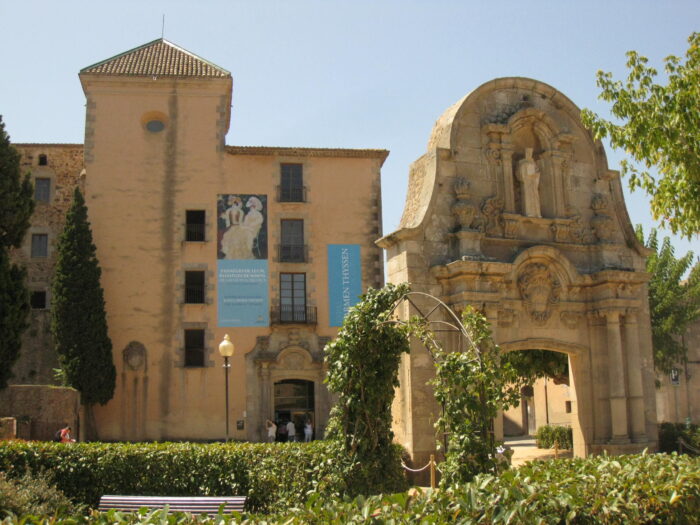
Espai Carmen Thyssen is located at the monastery. Photo by Enfo licensed under CC BY-SA 3.0
The Espai Carmen Thyssen is a relatively new addition to the Costa Brava’s art scene, acting as an extension of the renowned Thyssen-Bornemisza Collection in Madrid. While it does not house a permanent collection, it offers temporary exhibitions featuring works from the Thyssen collection, often focusing on Impressionist and modern paintings.
Highlights:
- Annual exhibitions showcasing internationally significant artworks.
- A cultural space set in a historic monastery.
- A bridge between Costa Brava’s art scene and major European collections.
Small galleries and coastal art hubs
Beyond the major museums, the Costa Brava is dotted with small galleries and artist-run spaces that showcase local talent. Many of these can be found in coastal towns that have long attracted painters, sculptors, and craftspeople drawn to the region’s Mediterranean light and landscape.
Cadaqués: A long-time artist’s retreat
Cadaqués has been an artistic hub for decades, famously attracting Salvador Dalí, as well as artists like Marcel Duchamp, Pablo Picasso, and Joan Miró. Today, the town remains a centre for contemporary art, with small independent galleries showcasing local and international artists.
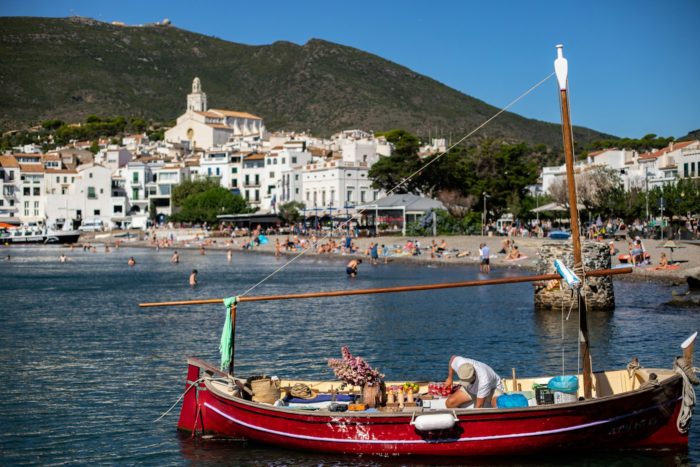
The picturesque village of Cadaqués: Photo by David Monje
Notable spaces:
- Galeria Patrick Domken – A well-respected gallery exhibiting contemporary works in painting and sculpture.
- Galeria Cadaqués – Founded in the 1970s, this gallery has a history of working with internationally renowned artists.
- Espai Cap de Creus – A small exhibition space that often hosts temporary shows by local artists.
Begur and Palafrugell: Coastal creativity
The towns of Begur and Palafrugell are known for their artistic communities, with galleries showcasing works that reflect the coastal surroundings. Many artists working in these towns are inspired by the dramatic cliffs, blue sea, and changing Mediterranean light.
Notable spaces:
- Galeria Miquel Alzueta (Begur) – A space dedicated to contemporary Catalan painters and sculptors.
- Fundació Josep Pla (Palafrugell) – While primarily a literary museum, it frequently hosts art exhibitions related to Josep Pla’s work and the local landscape.
The role of small galleries in Catalan art
Unlike larger institutions, these smaller galleries allow visitors to engage directly with artists and discover unique, locally produced works. Whether in Cadaqués, Begur, or one of the many creative hubs along the Costa Brava, exploring these galleries offers a more personal and intimate experience of the region’s artistic life.
The Costa Brava as an artist’s inspiration
For centuries, the Costa Brava has captivated artists with its dramatic coastline, vibrant light, and rich cultural history. From medieval painters decorating Romanesque churches to Salvador Dalí’s surrealist experiments, the region has shaped some of Catalonia’s most significant artistic movements.
Many artists have been drawn to the Mediterranean light, which changes throughout the day and creates striking contrasts between the deep blue sea, golden cliffs, and whitewashed villages. This natural beauty has inspired painters like Joaquim Mir, Ramon Casas, and even foreign artists who spent time in the region.
Beyond its landscapes, the Costa Brava offers a unique blend of tradition and modernity, making it an ongoing source of creativity. Whether visiting a renowned museum, exploring a small gallery, or simply walking through the artistic streets of Cadaqués, art lovers will find plenty to inspire them.
For those seeking a cultural experience beyond the beaches, the Costa Brava’s museums and galleries provide a deep connection to the region’s artistic soul—one that continues to evolve while remaining rooted in its history.
Tags: Art, Museums, Salvador Dalí