Learn how to make authentic Catalan fish stew with our guide to this iconic coastal recipe.
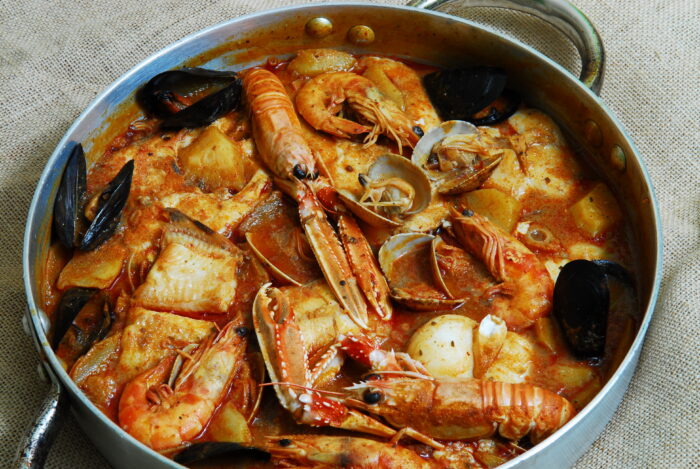
Suquet is a fish stew found in Catalan cuisine. Photo by Damià Llaó licensed under CC BY-SA 4.0
Catalonia’s cuisine is deeply tied to its Mediterranean coastline, where seafood plays a starring role in many traditional dishes. Among these, Catalan fish stew, or suquet de peix, stands out as a beloved culinary creation that reflects the region’s fishing heritage. Originally a humble dish made by fishermen to use up the day’s catch, it has since evolved into a popular and cherished recipe found in homes and restaurants alike.
This hearty stew, rich with the flavours of fresh fish, shellfish, and saffron, showcases the best of Catalan cooking—simple ingredients combined in a way that celebrates the natural flavours of the sea. In this article, we’ll explore the history of Catalan fish stew, guide you through how to make it at home, and share tips for pairing it with wine or experiencing it at its best in Catalonia.
The history and origins of Catalan fish stew
The story of suquet is as rich as the dish itself. What began as a simple fisherman’s meal has evolved into a staple of Catalan cuisine, reflecting the region’s deep connection to the Mediterranean Sea.
Suquet de Peix and its humble beginnings
The origins of Catalan fish stew can be traced back to the fishing communities that dot Catalonia’s Mediterranean coastline. Traditionally, this dish was a way for fishermen to make use of leftover fish that weren’t sold at market. Rather than letting these less-desirable fish go to waste, they were simmered in a broth made from their bones and combined with simple, hearty ingredients like potatoes and tomatoes. The term suquet comes from the Catalan word suquejar, meaning to release juices or simmer, reflecting the dish’s slow-cooked nature.
Suquet de peix was not only a practical dish but also a deeply personal one, varying from family to family and village to village. Each version of the stew would depend on the catch of the day and the available ingredients, making it a flexible yet essential part of Catalan coastal life.
Evolution into a culinary staple
While it began as a humble fisherman’s meal, over time suquet de peix made its way into restaurant kitchens where it was refined without losing its rustic charm. Today, Catalan fish stew is enjoyed by locals and visitors alike, often featuring a mix of high-quality fish and shellfish, along with saffron and other luxurious touches. The enduring popularity of suquet de peix is a testament to its adaptability and its deep connection to Catalonia’s seaside heritage.
Traditional ingredients of Catalan fish stew
The beauty of the dish lies in its simplicity, with a focus on fresh, high-quality ingredients that bring the dish’s Mediterranean flavours to life. While there are many regional and personal variations, the foundation of the stew remains consistent. Each ingredient plays a crucial role, from the fish and seafood to the vegetables and herbs, creating a balanced, flavourful dish that embodies the essence of Catalonia’s coastal cuisine.
Key seafood and fish choices
The star of any suquet de peix is, of course, the seafood. Traditionally, the dish is made with a combination of firm, white fish such as monkfish, hake, or cod. These fish hold their shape well during cooking and absorb the flavours of the broth. Alongside the fish, shellfish like prawns, mussels, or clams are often added for extra flavour and texture, contributing to the stew’s richness and complexity.
Catalan fishermen historically used whatever they had on hand, which means you can adapt the recipe based on the seafood available to you. Whether using local fish or sourcing ingredients from a seafood market, the key is freshness.
The role of broth and vegetables
A good fish stock forms the backbone of the stew, providing depth and richness to the dish. This is typically made by simmering the bones of the fish used in the stew with a few aromatics such as onions, celery, and carrots. The stock is then combined with sautéed potatoes, tomatoes, garlic, and onions, creating a hearty base for the seafood to shine.
The addition of potatoes helps to give the stew its characteristic thickness, while the tomatoes and onions bring sweetness and acidity to balance the richness of the fish.
Signature seasoning and saffron
One of the defining features of Catalan fish stew is the use of saffron, which adds both flavour and a beautiful golden hue to the dish. Saffron, known for its earthy and slightly floral notes, works in harmony with the seafood to elevate the overall taste of the stew. Alongside saffron, spices like paprika, fresh parsley, and bay leaves are commonly used to enhance the dish’s depth and aroma.
How to make suquet de peix at home
Bringing the authentic flavours of Catalan fish stew to your kitchen is simpler than it may seem. With a few fresh ingredients and the right techniques, you can recreate this classic Mediterranean dish at home. In this section, we’ll guide you through the key steps of preparing the stew, from selecting the best fish to building layers of flavour for a truly satisfying meal.
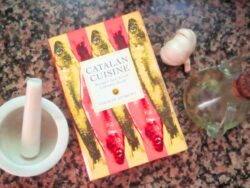 If you’re interested in learning more about Catalan cookery we recommend Catalan Cuisine by Coleman Andrews, available from Amazon and other online stores.
Ingredients
- 600g of white fish (such as monkfish, hake, or cod), cut into chunks
- 300g of mixed seafood (such as prawns, mussels, or clams)
- 2 large potatoes, peeled and sliced
- 1 onion, finely chopped
- 2 ripe tomatoes, grated
- 2 garlic cloves, minced
- 1 cup of fish stock (or water)
- 1 glass of dry white wine
- 1 bay leaf
- A pinch of saffron
- Olive oil
- Salt and pepper to taste
For the picada
- 10 toasted almonds
- 2 garlic cloves
- 1 small slice of toasted bread
- Fresh parsley
Method
Prepare the base: Heat 2-3 tablespoons of olive oil in a large, deep pot over medium heat. Once the oil is hot, add the finely chopped onion and sauté for about 5-7 minutes, until softened and translucent. Stir occasionally to prevent burning. Add the minced garlic and cook for another minute until fragrant. Then, add the grated tomatoes, stirring to combine. Cook the mixture for about 5-8 minutes until it thickens and reduces slightly, forming a rich tomato base. This forms the foundation of the stew’s flavour.
Add the potatoes: Once the tomato mixture is ready, add the sliced potatoes to the pot. Stir to coat them in the tomato and onion base. Next, pour in the fish stock (or water), ensuring the potatoes are mostly submerged. Add the bay leaf and a pinch of saffron. The saffron will infuse the broth with its distinctive golden colour and subtle earthy flavour. Bring the mixture to a simmer, cover the pot, and let it cook gently for about 15 minutes or until the potatoes are tender when pierced with a fork. This stage allows the potatoes to absorb the flavours of the broth and soften before the fish is added.
Add the fish and seafood: Once the potatoes are nearly cooked, carefully add the chunks of white fish to the pot. Pour in the white wine, and season the stew with salt and pepper to taste. Stir gently to avoid breaking up the fish. Let the stew simmer for about 10 minutes, allowing the fish to cook through. Add the prawns, mussels, and clams (or other seafood), and cook for an additional 5-7 minutes, or until the mussels and clams open up and the prawns turn pink. Be sure to discard any mussels or clams that do not open. This stage infuses the broth with the briny flavours of the shellfish.
Make the Picada: While the stew simmers, prepare the picada, a traditional Catalan garlic-almond paste that adds depth and texture to the dish. In a mortar and pestle (or blender), grind together the toasted almonds, garlic cloves, toasted bread, and a handful of fresh parsley. Blend until the mixture forms a thick paste. Stir this picada into the stew during the final 2-3 minutes of cooking. The picada will slightly thicken the broth and add a rich, nutty flavour to balance the dish’s briny and aromatic notes.
Finish and serve: Taste the stew and adjust the seasoning with more salt and pepper if needed. Remove the bay leaf and allow the stew to rest for a few minutes off the heat to let the flavours meld together. Ladle the Suquet de Peix into shallow bowls, making sure each portion has a good mix of fish, seafood, and potatoes. Serve with crusty bread on the side to soak up the fragrant, saffron-infused broth. Optionally, drizzle a little extra olive oil over the top just before serving for added richness.
Wine pairings with Catalan fish stew
Pairing the right wine with suquet de peix can elevate the dish, highlighting the flavours of the seafood and enhancing the warmth of the saffron and spices. Whether you prefer a crisp white or a light red, Catalonia’s rich wine tradition offers plenty of options that complement this Mediterranean dish perfectly.
Catalan wine recommendations
For a classic pairing, Cava, Catalonia’s famous sparkling wine, is a natural choice. The effervescence and acidity of Cava cut through the richness of the stew, making it an excellent contrast to the hearty broth and the delicate seafood. Opt for a Brut or Brut Nature Cava, which will have enough crispness to balance the savoury and slightly spicy notes of the dish.
Another excellent option is a white wine from Penedès or Empordà, such as Xarel·lo or Macabeo. These wines, with their fresh acidity and citrus undertones, pair well with the saffron and garlic in the stew, bringing out the dish’s lighter, aromatic qualities. For a slightly fuller-bodied option, consider a Garnacha Blanca from Terra Alta, which offers more structure while still complementing the seafood.
Red wine options for bolder pairings
If you prefer red wine, light and fruit-forward reds like Garnacha (Grenache) or Tempranillo can be a surprising yet satisfying match for Catalan fish stew. These reds bring a touch of ripe fruit and earthiness without overwhelming the delicate flavours of the seafood. A young Garnacha from the Priorat or Montsant regions offers a good balance of freshness and depth, making it suitable for richer, more robust versions of the stew.
For those who enjoy bolder reds, try a lightly chilled Garnacha to keep the wine fresh and lively, allowing it to complement the stew rather than dominate it.
Where to experience authentic Catalan fish stew
While making Catalan fish stew at home is a rewarding experience, nothing compares to enjoying the dish in its place of origin. Whether you’re visiting a seaside village or a bustling city, there are plenty of opportunities to savour authentic suquet de peix in Catalonia. From charming local eateries to high-end restaurants, this dish is a staple of the region’s seafood cuisine.
If you’re feeling adventurous, visit a local fish market—such as the famous Mercat de Sant Josep de la Boqueria in Barcelona—where you can purchase freshly caught seafood and learn about the best local ingredients for making your own Suquet de Peix.
Recommended books
Catalan Cuisine by Coleman Andrews